
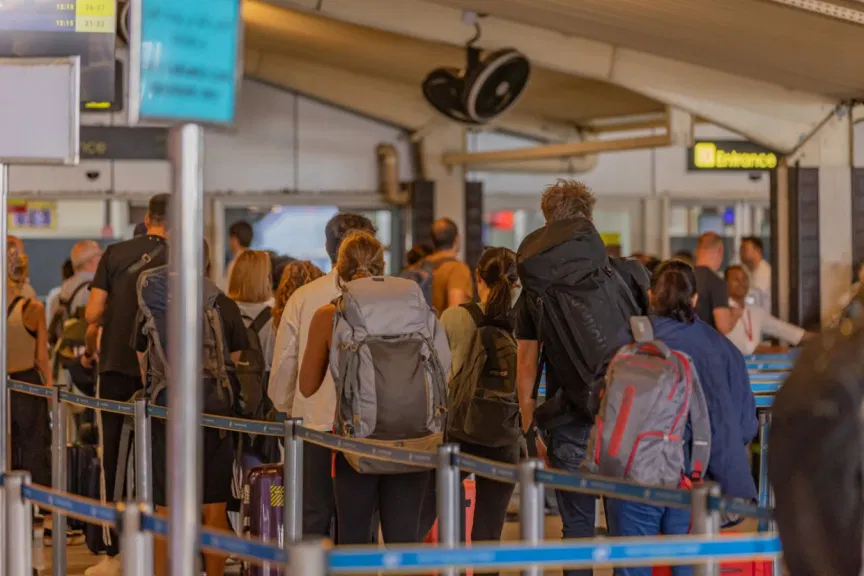
The Maldives has achieved what many considered unthinkable just a few years ago: welcoming 2 million tourists in a single year. In 2024, this Indian Ocean paradise not only met but exceeded its ambitious tourism target, marking a historic milestone that underscores the archipelago's growing appeal as a world-class destination. With record-breaking monthly arrivals, shifting source markets, and an evolving tourism landscape, the Maldives is rewriting the rules of luxury travel while becoming surprisingly accessible to a wider range of visitors.
How the Maldives Reached Its 2 Million Visitor Milestone
The numbers tell a compelling story of resilience and strategic growth. According to the Maldives Marketing and Public Relations Corporation (MMPRC), the country welcomed its 2 millionth tourist on December 26, 2024, when Austrian national Astrid Dirnegger arrived with her family for their third visit to the islands. This achievement wasn't just symbolic—it represented a 9.1% increase over 2023 figures and exceeded the government's target by 46,579 visitors.

"Welcoming our 2 millionth tourist of 2024 is a source of pride for the nation, and a testament to the hard work and dedication of the entire tourism industry," said Ibrahim Shiuree, Chief Executive Officer and Managing Director of MMPRC. The organization noted that this milestone followed a record-breaking February that saw over 217,394 arrivals—the highest number ever recorded in a single month. February 10 alone witnessed 10,214 arrivals, setting a new single-day record.
Timeline: The Road to 2 Million Visitors in 2024
The path to this historic achievement unfolded through strategic planning and favorable conditions. Early in the year, President Mohamed Muizzu had set the ambitious 2 million target, building on the momentum from 2023's strong recovery. February emerged as the standout month, with arrivals surging 22.2% compared to February 2023. Throughout the year, monthly visitor figures consistently exceeded the previous year's numbers, with only May showing a slight 0.9% decline.
The final push came in December, when the Maldives welcomed 208,980 tourists—a 7.3% increase over December 2023 and enough to push the annual total past the 2 million mark. The daily arrival average in December stood at 6,741, with a single-day high of 9,440 arrivals during the peak holiday period.
Why the Maldives Is Drawing Record Numbers: Market Shifts and New Opportunities
The changing landscape of Maldives tourism reveals fascinating trends about global travel patterns. China has emerged as the largest source market, accounting for 261,821 visitors or 13.1% of total arrivals. Russia follows closely with 217,724 arrivals (10.9%), while the United Kingdom ranks third with 176,312 tourists (8.9%). Perhaps most surprisingly, India—which was the largest source market in 2023—fell to sixth position in 2024, with arrivals declining by approximately 37.47% to 127,594 visitors.
The MMPRC has been strategically expanding into new markets, successfully attracting visitors from Azerbaijan, Georgia, and Bangladesh for the first time in significant numbers. Beyond traditional beach tourism, the organization has initiated efforts to establish footholds in emerging segments including sports tourism, film production, and medical tourism. These diversification efforts were highlighted at the groundbreaking 'DATA 2024' conference—the largest of its kind in Southeast Asia—which brought together industry leaders and data experts from around the world.
Where Things Stand Now: Current Tourism Landscape and Travel Planning
For travelers considering a Maldivian getaway, understanding the current landscape is crucial. The record arrivals have led to increased infrastructure development, including the expansion of Velana International Airport, which is expected to increase tourist arrivals by 10.3% on average in the medium term. However, this growth has also brought changes that affect visitors: departure taxes have increased, with economy class passengers now paying $50 (up from $30), business class $120 (from $60), and first class $240 (from $90).
Despite these increases, the Maldives is paradoxically becoming more accessible to budget-conscious travelers. Once considered exclusively for the ultra-rich, the destination now offers more affordable options through local island stays, guesthouses, and off-season deals. The traditional resort-based model is being complemented by more diverse accommodation options that cater to different travel styles and budgets.
What Happens Next: The Future of Maldives Tourism
Looking ahead, the Maldives tourism industry shows no signs of slowing down. The MMPRC has announced plans for an even more successful 2025, with multiple initiatives including the "World's Biggest Giveaway 2025," a year-long global promotion. The organization remains committed to promoting the Maldives as the world's leading destination while ensuring sustainable growth that benefits local communities and preserves the fragile island ecosystem.
For travelers, this means continued innovation in tourism offerings, with new resorts opening regularly and existing properties undergoing renovations to meet evolving expectations. The focus on sustainability is growing, with more resorts implementing eco-friendly practices and contributing to conservation efforts that protect the Maldives' renowned marine life and coral reefs.
The Bottom Line: Key Takeaways for Your Maldives Trip
Planning a trip to the Maldives requires balancing several factors. The best time to visit is during the dry season from November to April, when you'll enjoy sunny days and calm seas—but this is also the most expensive period. For budget travelers, the rainy season from May to October offers significant savings, with September and October particularly good value. Regardless of when you visit, booking 6-12 months in advance is recommended, especially for popular resorts during peak season.
Consider exploring beyond the traditional resort model by spending time on local islands, where you'll experience authentic Maldivian culture and save considerably on accommodation. Look for resorts that don't require expensive seaplane transfers, and consider visiting during shoulder seasons (April-May or October-November) for the best balance of weather and value. With strategic planning, the Maldives—once considered the exclusive domain of honeymooners and luxury seekers—can be an accessible destination for a wider range of travelers seeking paradise without breaking the bank.