
Nepal has long topped the wish lists of travelers drawn to the world's highest mountains, but a wave of recent headlines about devastating flash floods has many would-be visitors asking a simple question first: where is Nepal — and is it still safe to go? The short answer is that this landlocked Himalayan nation sits in South Asia, wedged between China to the north and India to the south, east, and west, and it remains one of the most rewarding destinations on the planet for trekkers, culture seekers, and wildlife lovers alike.
Yet this month's catastrophic flooding in the country's northern Rasuwa district is a powerful reminder that timing and preparation matter enormously when planning a trip here. Below, we break down Nepal's geography, its must-see destinations, the best time to visit, and what the latest travel safety guidance means for your plans.
Where Is Nepal? A Landlocked Giant Between Two Superpowers
Nepal occupies just 147,516 square kilometers — roughly the size of the U.S. state of Arkansas — but within that compact footprint it packs one of the most dramatic landscapes on Earth. The country is completely landlocked, bordered by the Tibet Autonomous Region of China to the north and by India to the south, east, and west. Its geography climbs from the low-lying Terai plains, which dip to around 59 meters above sea level, all the way up to the summit of Mount Everest at 8,848 meters, giving Nepal one of the widest ranges of elevation of any country in the world.
That extraordinary verticality is the heart of Nepal's appeal. The nation is home to eight of the world's fourteen "eight-thousanders" — peaks rising above 8,000 meters — including Everest, Kanchenjunga, and Lhotse, which is precisely why it has become the global capital of high-altitude trekking and mountaineering. Kathmandu, the capital, serves as the entry point for nearly every international visitor, connected by direct flights from across Asia and the Middle East.
The 6 Destinations That Belong on Every Nepal Itinerary
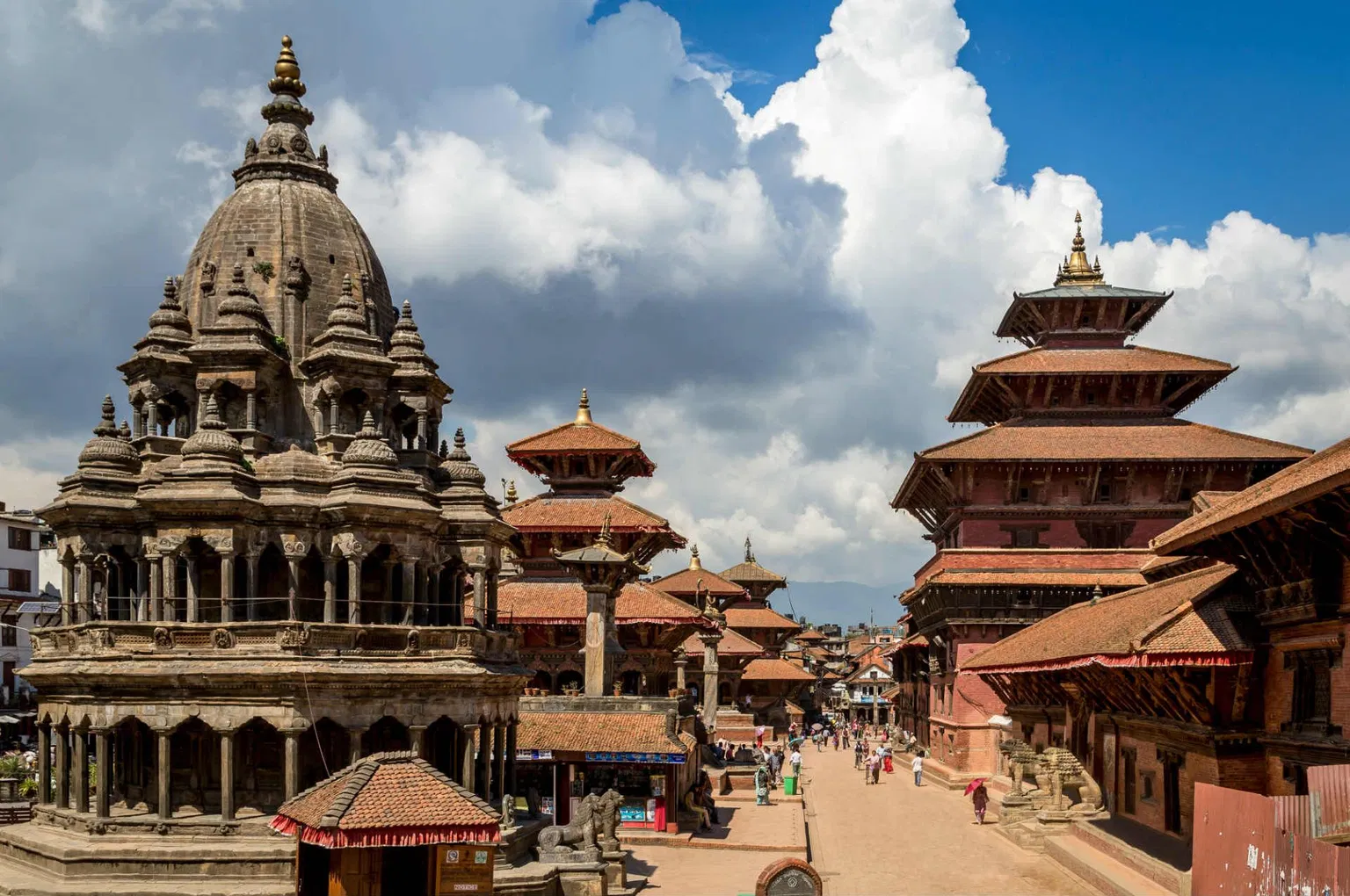
Most first-time visitors structure their trip around a handful of iconic stops. The Kathmandu Valley is the natural starting point, home to seven UNESCO World Heritage Sites, including the medieval Durbar Squares of Kathmandu, Patan, and Bhaktapur, and the hilltop Swayambhunath "Monkey Temple." West of the capital, Pokhara is the country's adventure hub, famous for Phewa Lake, relaxed lakeside cafés, paragliding, and jaw-dropping views of the Annapurna range.
For trekkers, the Everest region (Solukhumbu) and the Annapurna Himalaya offer world-class trails, from short teahouse hikes to the full Everest Base Camp trek. Further south, Chitwan National Park delivers rhino and tiger spotting in the Terai lowlands, while Lumbini — the birthplace of the Buddha — draws pilgrims from around the world. To the north, the remote, rain-shadowed kingdom of Mustang offers a starkly beautiful, Tibetan-influenced landscape that feels a world away from the busy trails.
Best Time to Visit: Why the Monsoon Calendar Matters
Nepal's ideal travel windows are the dry, clear months of autumn (September to November) and spring (March to May), when skies are sharp and mountain views are at their best. The summer monsoon, which runs roughly from June to August, brings heavy rain that routinely triggers landslides and flash floods in the steep river valleys — exactly the conditions behind this month's disaster. If you can only travel in summer, stick to the rain-shadowed zones north of the main Himalayan crest, such as Upper Mustang, and build extra flexibility into your itinerary.
What the Recent Flash Floods Mean for Travelers
Earlier this month, a sudden surge of water tore down the Bhote Koshi River in the northern Rasuwa district, north of Kathmandu, after a glacial collapse and debris flow — not, as initially reported, an earthquake, according to the U.S. Geological Survey. Nepali police recovered at least 162 bodies, and the Nepal Tourism Board said 403 people were unaccounted for, most of them foreign travelers on organized tours. Among the missing were 33 Americans, 34 Australians, and 24 Canadians, according to tourism board CEO Hikmat Singh Ayer.
In response, the Nepal Tourism Board issued an urgent advisory asking tourists to avoid flood-affected areas and postpone non-essential travel, while the U.S. State Department pledged $500,000 in humanitarian assistance through Catholic Relief Services. The flooding damaged roads, bridges, and at least six hydropower and transmission facilities, underscoring how quickly mountain travel conditions can change during monsoon season — and why travel insurance and flexible bookings are non-negotiable.
Travel Safety and Planning Essentials
None of this means you should skip Nepal — it simply means you should plan carefully. Book through reputable operators, register with your embassy, and buy comprehensive travel insurance that explicitly covers trekking, helicopter evacuation, and trip cancellation. When you arrive, drink only bottled or filtered water, ease into the altitude slowly (especially above 3,000 meters), and respect local customs, such as eating with your right hand and dressing modestly at temples. On the trail, dal bhat — Nepal's ubiquitous lentil-and-rice meal — is your budget-friendly fuel, and expect limited Wi-Fi and wobbly bus rides as part of the adventure.
Where Things Stand Now
Rescue and relief operations continue, with helicopter teams reaching areas that remain inaccessible by road. Most of Nepal — including Kathmandu, Pokhara, Chitwan, and the popular Everest and Annapurna trekking routes — is far from the flood zone and operating normally for travelers. The key is to monitor advisories from the Nepal Tourism Board and your home government, and to reconsider any plans that take you into the affected river valleys or remote border areas until conditions stabilize.
The Bottom Line: Key Takeaways for Nepal Travelers
- Nepal is a landlocked South Asian country between China and India, spanning 147,516 sq km.
- It is home to Mount Everest and eight of the world's 14 peaks above 8,000 meters.
- Top stops include the Kathmandu Valley, Pokhara, Everest, Annapurna, Chitwan, and Lumbini.
- Visit in autumn or spring; avoid monsoon-season travel to steep river valleys.
- Check Nepal Tourism Board advisories after the recent Rasuwa district flash floods.