
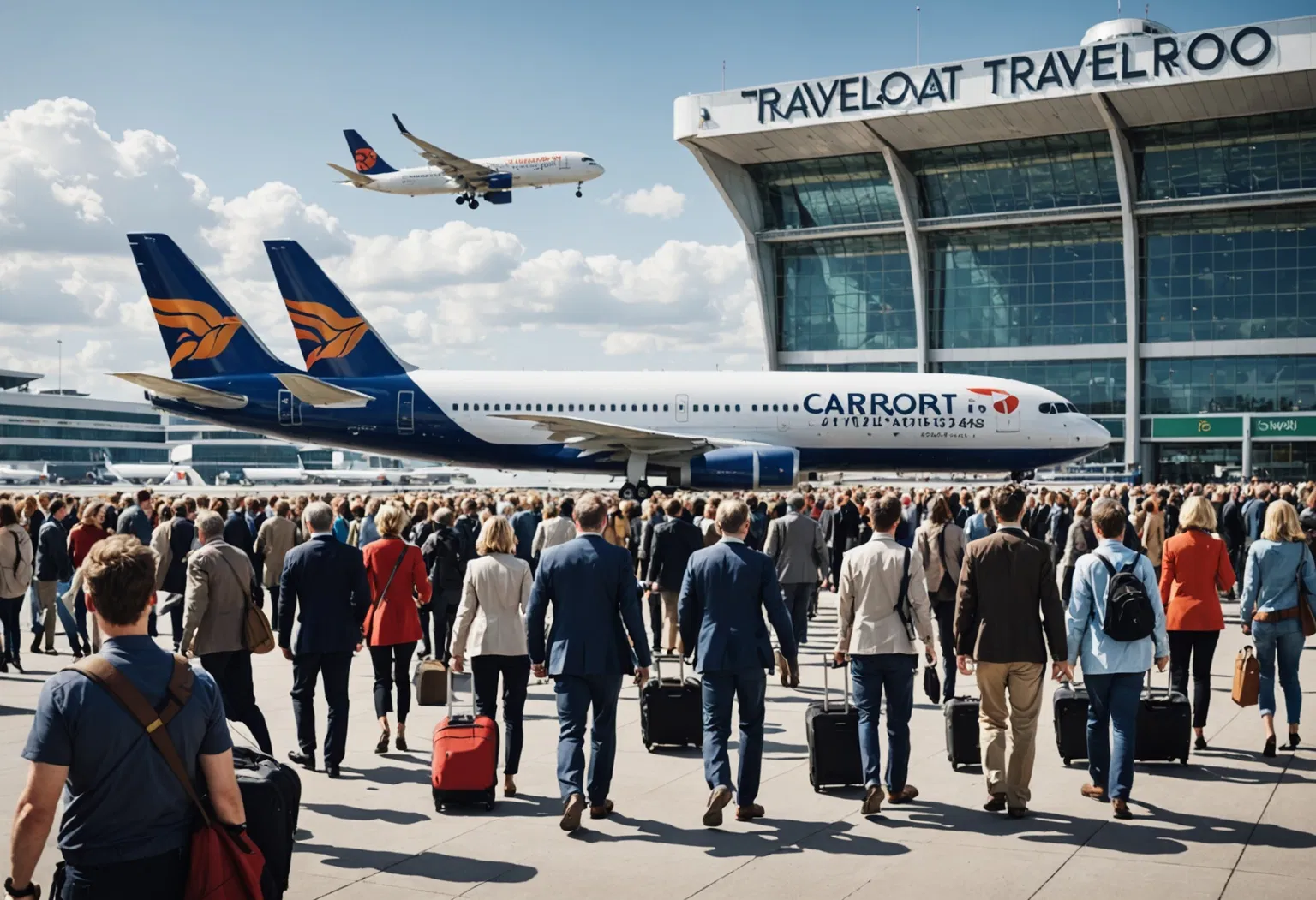
Airport surged into global headlines this September for a reason travellers will not soon forget: the United Kingdom's air traffic control system failed not once, but twice in 13 days — its third major failure since 2023 — grounding roughly 2,000 flights and stranding hundreds of thousands of passengers at Heathrow, Gatwick, Manchester and beyond. The first meltdown, on 8 September 2026, was the most serious disruption to British airspace since August 2023. It was followed by a second technical fault on 21 September that triggered another wave of cancellations and delays, this time centred on Glasgow and Belfast. For anyone planning to fly to, from or through the UK, the episode is a sharp reminder that even a millisecond-long software defect can unravel an entire itinerary — and that the compensation travellers often assume they are owed is far from guaranteed. Here is what happened, why it matters and exactly what you should know before heading to the airport.
Inside the Millisecond Software Defect That Grounded the UK
The first failure began on Tuesday 8 September, when a fault in the flight processing system at NATS's Swanwick control centre forced the network offline for around four hours. NATS — National Air Traffic Services, the body that handles most of the UK's en-route air traffic — had to fall back on slower, manual procedures, sharply reducing the number of flights that could safely take off and land. The result was immediate and severe: around 1,300 flights were cancelled on the Tuesday alone, with more than 2,000 cancelled or failed to operate across the two days and an estimated 300,000 passengers affected.
Heathrow, the UK's busiest airport and one of the busiest in Europe, was among the hardest hit, alongside Gatwick, Manchester, East Midlands, Edinburgh, London City, Luton and Bristol. Airports in Scotland and the Republic of Ireland reported knock-on delays, and carriers including British Airways, Ryanair, easyJet and Air India scrambled to rebook passengers.
For days the cause was a mystery, and the explanations kept shifting. Early reporting pointed to a military aircraft entering what was described as "spurious" flight data into the system, and NATS initially pointed to a rogue flight plan similar to the one behind the 2023 meltdown. The Ministry of Defence was forced to publicly deny any role. Ryanair's outspoken chief executive Michael O'Leary went further, accusing NATS boss Martin Rolfe of "lying" and of giving two contrasting explanations for the failure. Then, on 18 September, NATS published a preliminary report with a more sobering account: the outage was caused by a software defect in a small part of the National Airspace System — legacy code that, in a window of about one millisecond, corrupted flight data. That corruption triggered backup protocols, meaning flight handovers had to be performed manually and capacity collapsed. NATS was clear that the meltdown was "not caused by any incorrect actions" by staff.
Timeline: 13 Days of Airport Chaos, From First Outage to Second
The disruption played out over two chaotic weeks:
- 8 September — NATS's Swanwick flight processing system fails, forcing the network offline for around four hours and cancelling roughly 1,300 flights on the day.
- 9 September — Operations slowly resume as the CAA warns passengers they are "unlikely" to receive compensation because air traffic control failure counts as an "extraordinary circumstance".
- 10 September — UK Parliament debates the crisis, confirming more than 2,000 cancelled flights and more than 150,000 passengers affected.
- 11–12 September — Reports blame a military aircraft's "spurious" flight data, and Michael O'Leary accuses NATS of giving contradictory explanations; the Ministry of Defence denies any role.
- 18 September — NATS's preliminary report blames a legacy software defect with a one-millisecond window that corrupted flight data, not human or military error.
- 21 September — A second technical fault hits NATS, with Glasgow and Belfast most affected and roughly 10% of flights cancelled.
- 22 September — Airlines and airports publicly criticise NATS over the second glitch in two weeks, renewing demands for compensation and reform.
Why Most Passengers Won't Get Compensation — and What They're Still Owed
The hardest truth for affected travellers is financial. Under UK and EU passenger-rights rules (UK261 and EC261), airlines must pay compensation of up to £520 per person when a delay is their fault. But air traffic control failure is classed as an "extraordinary circumstance" — an event outside the airline's control — which removes the compensation requirement. The Civil Aviation Authority confirmed that passengers caught up in the September outages are "unlikely to be entitled to compensation" for the delays and cancellations themselves.
That does not mean travellers are left empty-handed. Even in extraordinary circumstances, airlines must still offer a choice between a full refund and rebooking on the next available flight, and they must provide "duty of care" — meals and refreshments, and hotel accommodation plus transport if you are stranded overnight. If your flight is cancelled and you choose not to travel, you are owed a refund for any unused part of your ticket.
The financial pain instead landed on the airlines, which are estimated to have absorbed millions of pounds in costs. Budget carriers Ryanair and Wizz Air called for an overhaul of NATS, while Airlines UK, the industry body, said it is "writing to Nats to demand immediate compensation for the costs incurred and a credible plan to improve resilience." Sky News reported that NATS's chief declined a compensation request from tour operator TUI for the earlier outage. The stand-off over who ultimately pays for the chaos is likely to rumble on long after the departure boards have returned to normal.
Where Things Stand Now After the Second Glitch
Just as travellers began to breathe easier, a second technical problem hit NATS on Sunday 21 September — barely 13 days after the first. This time the impact was more contained but still significant: Glasgow and Belfast were the airports most affected, with cancellations reaching roughly 10% of scheduled flights. Airlines, already furious after the first outage, again criticised the air traffic control provider, with some questioning the resilience of the wider system.
In the days after each incident, flight operations largely stabilised, but the pattern of repeated failures has shaken confidence in the UK's air traffic infrastructure. This was the third major Swanwick failure since 2023, following a radar-related issue in July 2025. NATS has said it is investigating the second incident, and the government has faced pressure to ensure the system — and its ageing software — is made more resilient before the busy winter and summer travel seasons.
How to Protect Yourself Before Your Next Airport Trip
Whether you are flying to, from or through the UK, a few practical steps can limit the damage if disruption strikes:
- Check status before you travel. Monitor your airline and the airport's official channels, and sign up for flight alerts, before heading to the terminal.
- Know what you are owed. Even with no compensation, you are entitled to rebooking or a refund, plus meals and a hotel if you are stranded overnight — ask at the desk and keep receipts.
- Don't bank on compensation. Because air traffic control failures are "extraordinary circumstances", a £520 payout is unlikely. Focus your energy on getting rebooked quickly.
- Review your travel insurance. Many policies do not cover air traffic control disruption for trip delay or abandonment, but some may cover consequential losses — check the small print before you buy.
- Build in buffer time. If your trip involves a connection or a can't-miss event, allow extra margin, and consider flying a day early where possible.
The Bottom Line: What Travellers Should Remember
- The UK's air traffic control system failed twice in 13 days in September 2026, its third major outage since 2023, grounding roughly 2,000 flights.
- NATS blamed a one-millisecond legacy software defect — not human or military error — for the first, larger outage.
- Passengers are "unlikely" to receive compensation, but refunds, rebooking and duty of care still apply.
- Ryanair and Wizz Air called for an overhaul, and airlines are demanding compensation from NATS.
- Check flight status, know your rights and review travel insurance before your next airport trip.