Fat Bear Week is back, and the internet's most beloved heavyweight competition has reached its final round in Katmai National Park and Preserve, Alaska. The annual online bracket — which lets anyone with an internet connection vote for the chunkiest brown bear on the Brooks River — closes September 29, 2026, when a new champion is crowned among bears that have spent all summer gorging on sockeye salmon. For travelers, it's also the perfect excuse to plan a bucket-list trip to Brooks Falls, one of the best places on Earth to watch wild brown bears in action.
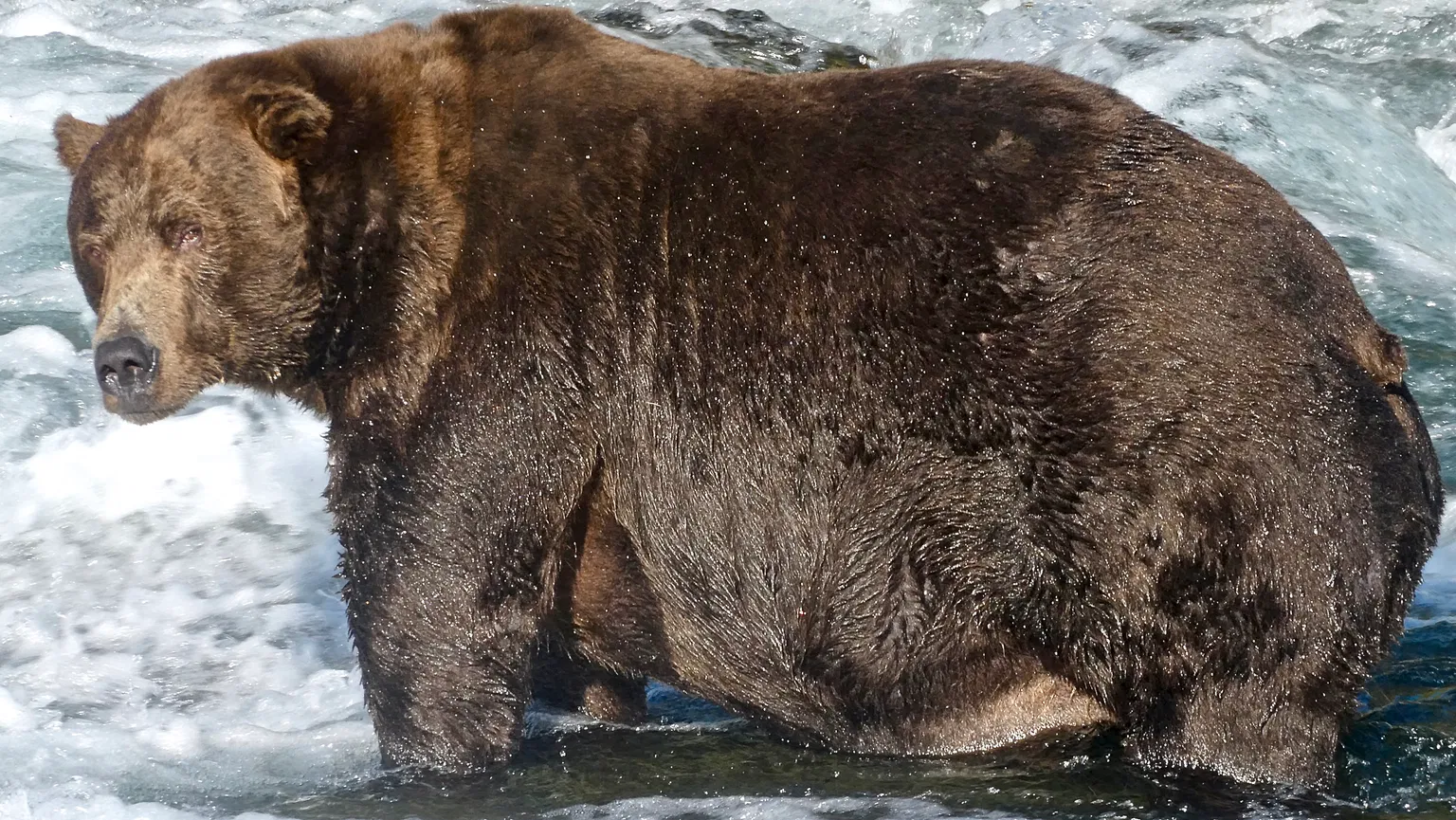
Run by Katmai National Park, the Katmai Conservancy and explore.org, Fat Bear Week turns the bears' late-season weight gain — a life-or-death adaptation for surviving hibernation — into a feel-good sporting event. Some of the largest brown bears on Earth make their home on the Brooks River, and by September the biggest males can top 1,000 pounds. The contest is playful, but the science behind it is serious: a fat bear is a healthy bear with the best shot at making it through the long Alaska winter.
Inside Fat Bear Week 2026: A Record-Setting Bracket
The 2026 tournament opened September 22 with 16 adult brown bears (Ursus arctos) facing off in daily head-to-head matchups. This year has been one for the record books: park biologists counted a record 19 bear families and 37 cubs on the Brooks River this summer, so organizers included five "bear families" — mothers with cubs — in the bracket for the first time. The contest has become such a phenomenon that Google even rolled out a dedicated Doodle to celebrate it.
Defending champion 32 "Chunk," a roughly 1,200-pound male who took the 2025 crown, entered as the bear to beat but was knocked out before the final four. The September 28 semifinals pitted Bear 132, a mother with cubs, against Bear 910, and Bear 89 "Backpack" against Bear 164 "Bucky" — with the two winners meeting in the September 29 final, where the champion is crowned.

From a Ranger's Idea to a Global Phenomenon
Fat Bear Week traces its roots to 2014, when a Katmai ranger floated a one-day "Fat Bear Tuesday" vote. It proved so popular that it expanded into a full week in 2015 and has since become a genuine internet institution, drawing hundreds of thousands of votes from around the world — more than 640,000 cast in 2022 alone.
The list of past champions reads like a hall of fame. 480 "Otis" was the original winner and a four-time champion, followed by 409 "Beadnose," 435 "Holly" and 747, who won in 2020 and 2022. Then came 128 "Grazer," who made history in 2023 and 2024 as the first female bear to win back-to-back titles. The Grazer-Chunk rivalry became one of the contest's great storylines: the fiercely protective Grazer beat the much larger Chunk in consecutive finals before he finally got his revenge in 2025, winning with 96,350 votes — more than 32,000 ahead of runner-up Bear 856.
The voting is refreshingly simple. Each day, two bears or families are matched up, and fans cast ballots online at fatbearweek.org between noon and 9 p.m. Eastern. Every contender gets a "before" photo from early summer and an "after" photo from September, and voters decide who pulled off the most impressive transformation.
How to See Katmai's Bears in Person
Here's the best part for travelers: these bears are real, and you can go see them. Katmai National Park sits on the Alaska Peninsula roughly 290 miles southwest of Anchorage, and there are no roads into Brooks Camp — which is all part of the adventure.
Most visitors fly commercially from Anchorage to the small town of King Salmon, then board a floatplane for the roughly 25-minute hop across Naknek Lake to Brooks Camp. Day trips from Anchorage typically run about $1,450 to $1,500 per person, including flights and park fees, while a King Salmon-to-Brooks floatplane seat costs around $500 round trip.
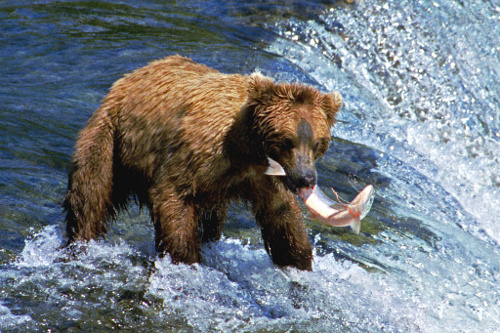
The main event is Brooks Falls, where from late June through September you can watch brown bears snatch leaping sockeye salmon from a series of elevated viewing platforms. July's peak salmon run draws the densest crowds of bears, but September — when the bears are at their heaviest, exactly like the Fat Bear Week contestants — delivers equally dramatic viewing as they hunt for dying salmon. To sleep near the falls, you'll need to win the Brooks Lodge lottery, which typically opens applications more than a year in advance for a maximum three-night stay, or secure a spot at Brooks Campground through recreation.gov. Beyond the falls, Katmai also offers flightseeing over the Valley of Ten Thousand Smokes, the ash-filled landscape left by the 1912 Novarupta eruption. Wherever you roam, stay on the marked platforms and give the bears plenty of space — these are wild, powerful animals, and rangers are on hand to keep both people and bears safe. Can't make the trip this year? Explore.org's live bearcams stream the falls for free, year-round.
Where Things Stand Now
As voting closes September 29, the 2026 crown is being decided, and the new champion will join a storied Hall of Champions. Win or lose, every bear on the Brooks River is already a success story — bulked up and ready for hibernation. Fans who want a front-row seat to the post-tournament action can keep watching the bears on explore.org's live cameras as they continue fishing through the autumn.
What Happens Next: Planning Your Own Katmai Adventure
Once the champion is crowned, the bears turn their attention to hibernation — and savvy travelers turn theirs to 2027. Brooks Lodge lottery applications for next summer typically open around December, and July and September day-tour slots fill up fast. The payoff is unforgettable: standing on a platform at Brooks Falls and watching the same bears you voted for swat salmon out of the air, just before they settle in for a long winter's nap.
Key Takeaways
- Fat Bear Week 2026 runs September 22–29 at Katmai National Park, with the champion crowned on September 29.
- Sixteen bears and five bear families competed, with a record 37 cubs counted on the Brooks River this summer.
- 32 "Chunk" is the defending 2025 champion at roughly 1,200 pounds; 128 "Grazer" is the only female back-to-back winner (2023–2024).
- You can visit these bears: fly Anchorage to King Salmon, then floatplane to Brooks Camp — or watch free on explore.org's bearcams.
- Prime bear-viewing runs late June through September, and Brooks Lodge lottery applications open about a year ahead.

.jpg?ref=cdn.posts.market)
