
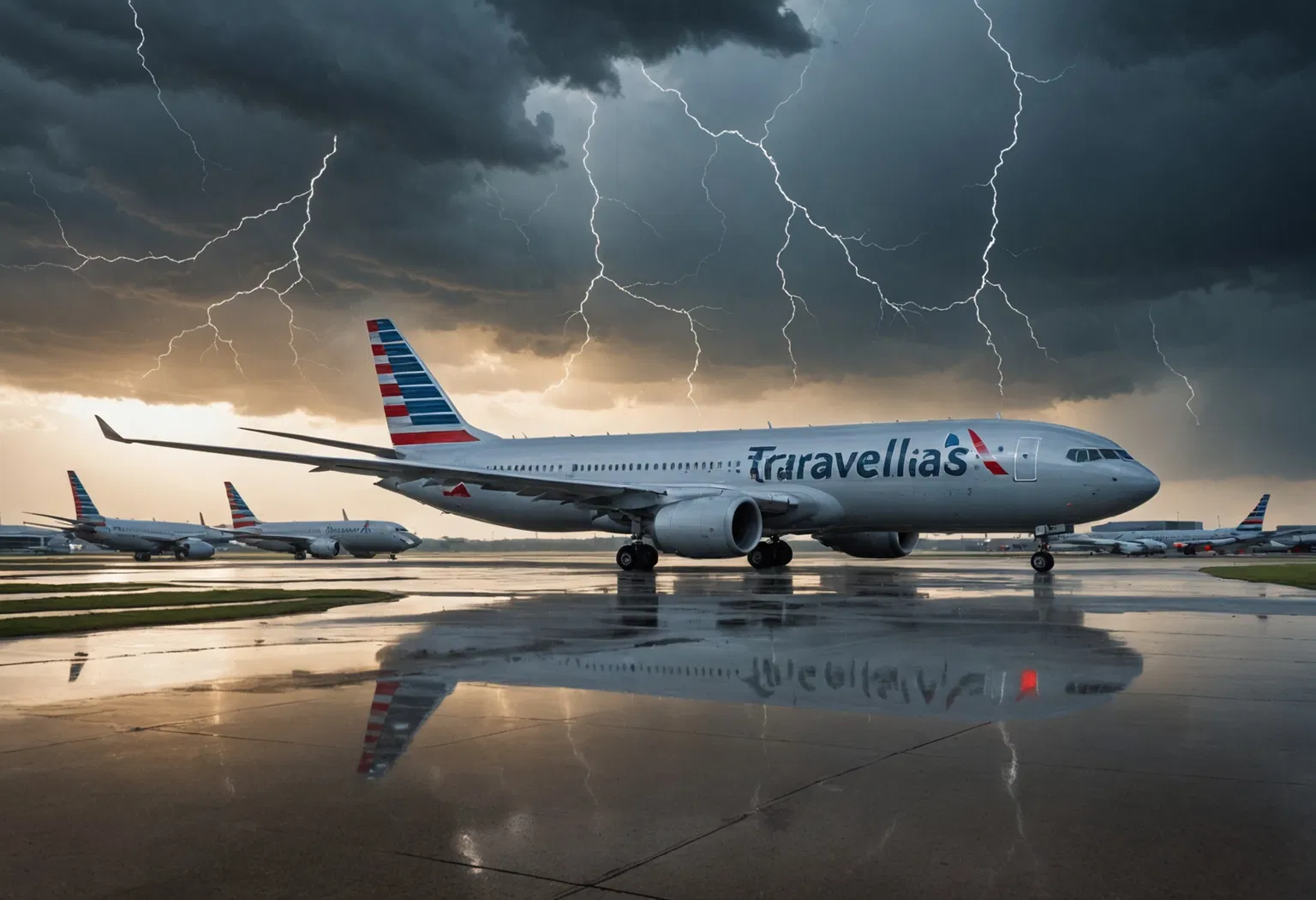
Flight cancellations and delays cascaded across Dallas-Fort Worth International Airport (DFW) on Thursday, October 1, 2026, as a slow-moving thunderstorm system dumped torrential rain over North Texas and triggered a Federal Aviation Administration (FAA) ground stop that brought operations at American Airlines' largest hub to a crawl. For travelers, it was a stark reminder that a single storm over one major airport can unravel flight schedules across the entire country.
By 7 a.m., DFW had already logged more than 150 flight cancellations, according to NBC DFW, as heavy rain and the threat of flash flooding prompted long delays and kept the region under a flood watch through Friday morning. The numbers only climbed from there: by Thursday afternoon, more than 1,200 flights had been delayed and over 320 canceled out of the airport, according to flight-tracking data, with Dallas Love Field and San Antonio International Airport also reporting disruptions.
How the Storm Brought America's Busiest Hub to a Halt
The disruption began when a band of severe thunderstorms rolled across the Dallas-Fort Worth metroplex, dropping between 1.5 and 2.5 inches of rain and triggering severe flash flooding in several areas. The National Weather Service issued a flood watch through Friday morning, and the FAA responded by placing DFW under a ground stop that stalled departing aircraft and pushed arrivals into lengthy holding patterns.
The impact was immediate and dramatic. American Airlines, which runs its single largest hub at DFW, bore the brunt of the operational chaos. Flight-tracking data compiled for October 2 showed American Airlines recorded roughly 775 delays and 137 cancellations across its network, while rival Southwest Airlines, with its major operation at nearby Dallas Love Field, tallied more than 1,000 delays of its own. All told, the disruption rippled nationwide, with approximately 4,115 flight delays and 433 cancellations reported across the United States on October 2 alone.
Severe weather at DFW is especially consequential because the airport functions as a connecting gateway for the entire central United States. When thunderstorms force the FAA to slow or halt traffic there, aircraft and crews are knocked out of position, and the resulting delays cascade to cities hundreds or thousands of miles away.
A Timeline of the DFW Disruption
The storm and its fallout unfolded rapidly, but the recovery took much longer. Here is how the disruption developed:
- Thursday morning, October 1: Rain begins falling across North Texas around 7:37 a.m., with a flood watch already in effect. The FAA issues a ground stop at DFW as thunderstorms intensify.
- By 7 a.m.: DFW reports more than 150 cancellations, with heavy rain and potential flash flooding driving long delays, according to NBC DFW.
- Thursday afternoon: Delays exceed 1,200 flights and cancellations top 320 at DFW, while Dallas Love Field and San Antonio International Airport also report cancellations and delays.
- Thursday evening: American Airlines and Southwest Airlines activate travel waivers for passengers flying to, from, or through Dallas-area airports, allowing fee-free rebooking.
- Friday, October 2: The nationwide ripple effect peaks, with more than 4,000 delays and over 430 cancellations recorded across the country as airlines work to reposition aircraft and crews.
Why DFW Delays Ripple Nationwide
To understand why a North Texas rainstorm stranded passengers in cities as far away as the coasts, it helps to understand DFW's role in the air travel system. Dallas-Fort Worth International Airport is consistently one of the busiest airports in the world, and it serves as the primary connecting point for American Airlines' route network. A single afternoon of reduced capacity there means hundreds of connecting passengers miss onward flights, while pilots and flight attendants end up in the wrong cities.
The result is a ripple effect that aviation experts sometimes call a cascade delay. Even after the weather clears, airlines need additional days to recover, because crews must be reassigned and aircraft must be repositioned before normal schedules can resume. For travelers, this is why a storm that hits on a Thursday can still produce delays and cancellations well into the weekend.
There is also a financial dimension. Airlines issue travel waivers during major storms precisely because they would rather let passengers rebook voluntarily than pay the operational and customer-service costs of mass involuntary rebooking. American Airlines' waiver allowed passengers scheduled to fly to, from, or through DFW to change their flights without paying change fees or a difference in fare, while Southwest offered comparable flexibility for its Dallas-area customers.
Where Things Stand Now
As the storm system moved out of North Texas, airport operations gradually normalized, though the backlog of displaced passengers and repositioned aircraft meant delays persisted through the following day. Flight-tracking data showed the nationwide disruption tally on October 2 remained elevated, with American Airlines still working through 775 delays and 137 cancellations across its system.
The FAA downgraded the ground stop as conditions improved, but travelers were advised to check their flight status before heading to the airport, since residual delays continued even after the weather cleared. Both American Airlines and Southwest Airlines kept their travel waivers in place to give affected passengers flexibility to rebook without penalty.
What Travelers Should Do Next
If your travel plans touched Dallas or any of the affected airports, there are several steps you can take to recover quickly and avoid being stranded. First, check your airline's app or website for the latest status, and sign up for real-time flight alerts so you know immediately if your schedule changes. If your flight is canceled or significantly delayed, remember that major U.S. airlines, including American, are generally required to rebook you on the next available flight with seats at no additional cost.
During a weather event, act fast when a travel waiver is issued. Airlines typically allow free changes within a specific window, and the earliest movers often grab the most convenient available seats. If you are already at the airport, use the airline's mobile app to rebook rather than waiting in long customer-service lines. Keep an eye on connecting airports as well, since a disruption at a hub like DFW can affect itineraries that do not even include Dallas.
Finally, document everything. Save your original itinerary, any cancellation notices, and receipts for expenses such as hotels or meals. While airlines are not generally required to cover weather-related costs, having records makes it easier to pursue refunds, travel credits, or compensation through your credit card's trip-protection benefits.
The Bottom Line
The October 1, 2026 storm delivered a hard lesson in how quickly a single weather system can disrupt air travel across North America. Here are the key takeaways:
- Severe thunderstorms over North Texas triggered an FAA ground stop at DFW, America's busiest connecting hub.
- DFW logged more than 150 cancellations by early morning and surpassed 1,200 delays and 320 cancellations by afternoon.
- American Airlines and Southwest Airlines issued travel waivers allowing free rebooking for affected passengers.
- The disruption rippled nationwide, contributing to more than 4,000 delays and 400+ cancellations across the U.S. the following day.
- Travelers should monitor flight status, act quickly on travel waivers, and keep records of any expenses to protect their plans.