
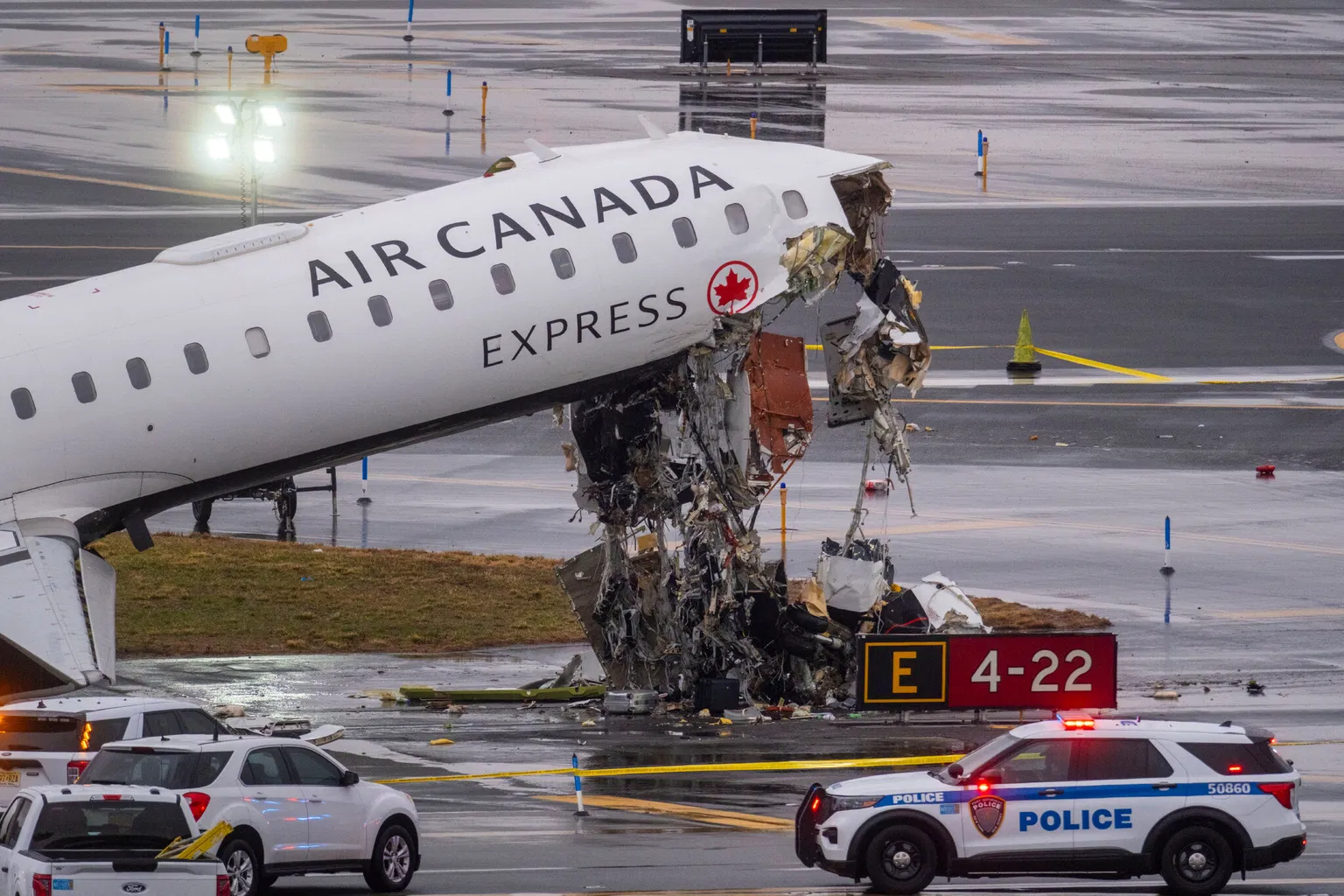
A deadly collision between an Air Canada Express regional jet and a fire truck has shut down New York's LaGuardia Airport, killing two pilots, injuring dozens of passengers, and triggering massive flight cancellations across the Northeast. The incident, which occurred late Sunday night as the CRJ-900 was landing on Runway 4, has left one of America's busiest airports closed indefinitely and created travel chaos for thousands of passengers during a peak travel period.
How the Deadly Collision Unfolded at LaGuardia
According to multiple aviation authorities and news reports, Air Canada Express Flight 8646, operated by Jazz Aviation, was arriving from Montreal when it struck a Port Authority Aircraft Rescue and Firefighting vehicle on the runway around 11:30 p.m. Sunday. The fire truck was reportedly responding to a separate incident involving a United Airlines flight when the collision occurred. Both pilots in the cockpit were killed instantly, while 41 passengers and crew members were injured, with nine hospitalized in serious condition.
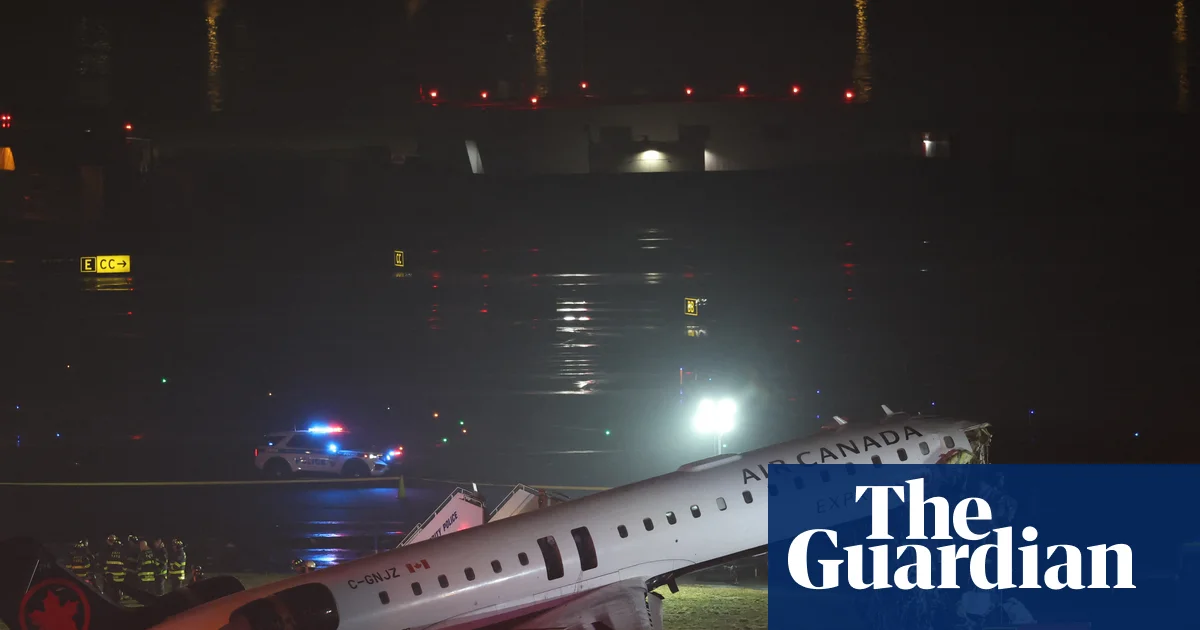
The impact left the aircraft with substantial damage to its forward section and landing gear, while the fire truck was completely destroyed. Emergency responders from the New York City Fire Department and Port Authority Police arrived within minutes, evacuating passengers amid heavy smoke and debris. "This is one of the most serious ground collision incidents we've seen at a major U.S. airport in years," said Kathryn Garcia, Port Authority Executive Director, during a morning briefing.
Timeline: The LaGuardia Airport Collision and Aftermath
The sequence of events began unfolding Sunday evening when a United Airlines flight reported a mechanical issue while taxiing, prompting the dispatch of fire and rescue vehicles. As the Air Canada Express jet was making its final approach, the fire truck unexpectedly entered the active runway. The collision occurred at approximately 11:28 p.m., with the aircraft traveling at about 39 kilometers per hour (24 mph) at the moment of impact.
Within 15 minutes, the Federal Aviation Administration issued a ground stop for all flights into and out of LaGuardia. By midnight, the airport was completely closed to all air traffic. Early Monday morning, the National Transportation Safety Board announced it was sending a go-team to investigate the accident. As of 8 a.m. Monday, FlightAware data showed 573 cancellations at LaGuardia, with hundreds more flights diverted to John F. Kennedy International Airport and Newark Liberty International Airport.
Why This Incident Matters for Travel Safety and Airport Operations
The LaGuardia collision raises critical questions about runway safety protocols and ground vehicle operations at major airports. Aviation safety experts note that while aircraft collisions with ground vehicles are relatively rare, they represent a significant vulnerability in airport operations. "This incident highlights the complex coordination required between air traffic control, ground operations, and emergency services," said former NTSB investigator John Cox. "When seconds count, communication breakdowns can have tragic consequences."
For the travel industry, the closure of LaGuardia—which handles approximately 30 million passengers annually—creates ripple effects across the entire Northeast corridor. The airport serves as a crucial hub for business travel to Manhattan and is particularly important for shuttle services between New York, Boston, and Washington D.C. With LaGuardia closed, airlines are scrambling to accommodate passengers on already-full flights at JFK and Newark, while ground transportation between these airports faces unprecedented demand.
Where Things Stand: LaGuardia Closure and Travel Chaos
As of Monday morning, the Federal Aviation Administration has extended the ground stop at LaGuardia until at least 2 p.m., with officials indicating the closure could continue through Tuesday. The Port Authority has established a unified command center to coordinate the response, while the NTSB investigation team is examining the wreckage and reviewing air traffic control communications.
Travel disruptions are extensive: American Airlines has canceled 127 flights, Delta Air Lines 98 flights, and United Airlines 86 flights at LaGuardia alone. Regional carriers serving smaller markets from the airport have been particularly affected, with many canceling all Monday operations. The Metropolitan Transportation Authority has increased Long Island Rail Road and Metro-North service to accommodate displaced air travelers, while ride-sharing services report surge pricing exceeding 300% around New York airports.
What Happens Next: Recovery and Investigations
The National Transportation Safety Board's investigation is expected to focus on several key areas: why the fire truck entered the active runway, whether air traffic control provided adequate warnings, and if any system failures contributed to the collision. Preliminary findings may take several weeks, with a full report potentially requiring 12-18 months. Meanwhile, airport officials must clear the wreckage, repair runway damage, and conduct safety inspections before LaGuardia can reopen.
For airlines, the immediate challenge involves reaccommodating thousands of displaced passengers. Most major carriers have issued travel waivers allowing passengers to rebook without change fees or receive full refunds. However, with limited availability on alternative flights, many travelers may face extended delays. Industry analysts predict the financial impact on airlines could reach tens of millions of dollars in lost revenue and compensation costs.
Key Points for Travelers Affected by the LaGuardia Closure
If your travel plans involve LaGuardia Airport in the coming days, here's what you need to know:
- Check flight status before heading to the airport: Most airlines are automatically rebooking passengers on canceled flights, but you should verify your new itinerary through airline apps or websites.
- Know your rights: Under U.S. Department of Transportation regulations, you are entitled to a full refund if your flight is canceled, regardless of the reason. Airlines must also provide accommodation and meal vouchers for significant delays.
- Consider alternative airports: JFK and Newark are handling diverted flights, but ground transportation between these airports and Manhattan is experiencing heavy congestion. Allow extra travel time—at least 3-4 hours before departure.
- Contact your airline directly: While wait times may be long, speaking with a customer service representative can sometimes yield better rebooking options than automated systems.
- Monitor travel advisories: The Port Authority and FAA are providing regular updates on airport operations. Follow official sources rather than social media for accurate information.
This developing story represents one of the most significant travel disruptions in recent New York aviation history. As investigations continue and recovery operations unfold, travelers should prepare for ongoing challenges while authorities work to restore normal operations at one of America's busiest airports.