
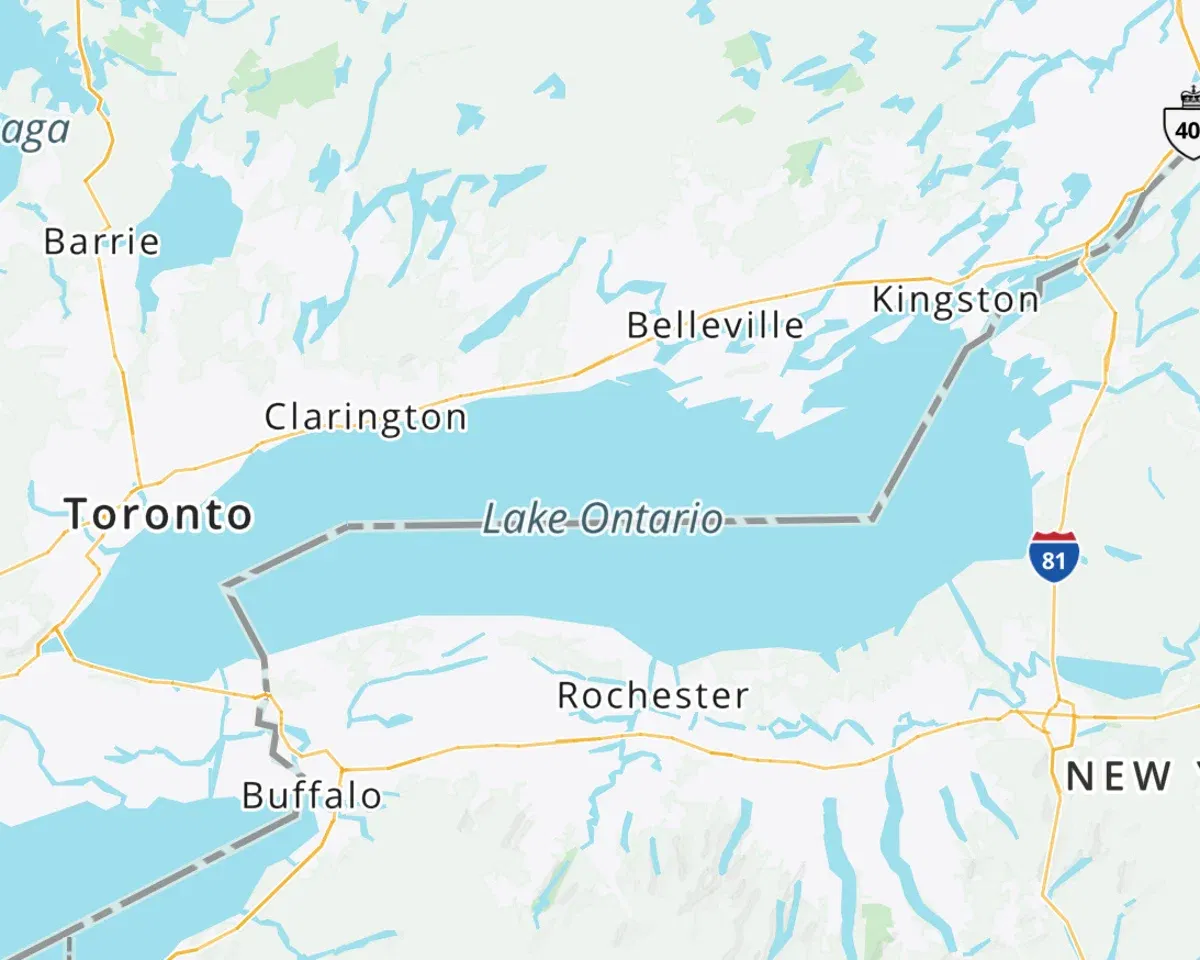
MapQuest, the 1990s mapping pioneer that taught a generation of travelers to print out turn-by-turn directions before every road trip, has rocketed to the top of Apple's US App Store chart — and it got there by refusing to change the name of a Great Lake. The navigation service, long overshadowed by Google Maps and Apple Maps, posted a defiant message in response to President Donald Trump's executive order renaming Lake Ontario as “Lake America”: “we're not changing it.”
That single stand — followed by a tongue-in-cheek “Name Your Own Lake” tool — turned MapQuest into the most-downloaded iPhone app in the United States and the second-most-downloaded app in Canada. It is a stunning comeback for a brand most travelers had written off, and it has reignited a debate over who gets to decide what the places on your map are called.
How MapQuest Became the App Everyone Is Downloading Again
The dispute traces back to an executive order signed on August 27, 2026, in which Trump directed that Lake Ontario — the easternmost of the five Great Lakes, a body of water shared by the United States and Canada — be renamed “Lake America.” The move arrived amid an escalating trade and tariff standoff with Canada, and it followed a similar 2025 order that renamed the Gulf of Mexico as the “Gulf of America.”
Where Google Maps and Apple Maps quietly updated their maps to display “Lake of America” for users located in the United States, MapQuest took a different route. The company — described by Business Insider as “the OG online map platform” — announced through its social channels that it would not alter the name on its maps, and it leaned into the joke with a satirical “Name Your Own Lake” generator that lets users slap any custom label onto a map, so long as it carries the “Lake” prefix.
The satirical response was no one-off. In February 2025, after Trump ordered the Gulf of Mexico renamed, MapQuest rolled out a “Gulf Map Generator” and openly trolled the White House's naming push — a viral moment that laid the groundwork for this week's surge.
From Gulf of America to Lake America: A Timeline
The road to MapQuest's App Store takeover unfolded in a matter of days:
- February 19, 2025: MapQuest launches its “Gulf Map Generator,” trolling Trump's order renaming the Gulf of Mexico. The tool goes viral on social media.
- August 27, 2026: Trump signs an executive order renaming Lake Ontario “Lake America,” deepening a trade dispute with Canada.
- August 28, 2026: Business Insider reports that MapQuest says it will not change the lake's name on its maps, joking about “Lake America.”
- August 30, 2026: MapQuest climbs to the second-most-downloaded app in Canada as backlash against Apple and Google grows.
- September 1, 2026: MapQuest reaches No. 1 on the US Apple App Store download list, surpassing Google Maps and Apple Maps.
Why a Naming Dispute Is Reshaping the Mapping Wars
For travelers, the episode is about more than a political slogan stamped on a map. It is a reminder that the app you open for directions controls how you see — and describe — the world around you. Mapping apps have quietly become the default authority on place names, and users noticed when two of the biggest changed one without much fanfare.
The backlash has centered on the fact that Lake Ontario is a shared geographic feature, not a US possession. Canada has rejected the renaming outright, and the change by Google Maps and Apple Maps — which displayed “Lake of America” only to users physically located in the United States — drew criticism as quiet compliance. MapQuest, by contrast, framed its refusal as a matter of geographic accuracy, delivered with a wink.
That positioning clearly resonated. MapQuest's free mobile app offers voice-guided navigation, real-time traffic, points-of-interest search and a gas-price comparison tool, all of which make it a legitimate alternative for road-trippers. The service launched on February 6, 1996 as the first commercial web mapping service — its roots stretch to 1967 and the Cartographic Services division of R.R. Donnelley & Sons — and it was later bought by AOL for $1.1 billion in 2000. After passing through Verizon's hands, it is now owned by System1, competing against Google Maps, Apple Maps and Here. This week, it received a marketing boost no ad campaign could buy.
Where Things Stand Now
As of September 1, MapQuest held the top spot on the US Apple App Store download chart, according to reports from The Guardian, CNN and The National. The Guardian's report, headlined “MapQuest app reaches No 1 on US Apple list after defying Trump's Lake Ontario order,” noted that the navigation app “surpasses Google and Apple Maps on top-downloaded US chart.” The National reported that backlash against Apple and Google “grows as MapQuest tops downloads,” describing the tech giants as falling into line with the president's order.
MapQuest's surge also extended north of the border, where the app reached the second-most-downloaded spot in Canada on the night of August 30 — a notable showing in the country at the center of the trade dispute that prompted the renaming in the first place.
What Happens Next for MapQuest and the Maps You Use
Whether MapQuest can convert a viral moment into lasting usage is the next question. Downloads are one thing; daily navigation is another. But the episode has already accomplished something significant: it reintroduced a once-dominant travel tool to millions of people who had forgotten it still exists, and it repositioned MapQuest as the mapping app that does not bend to political pressure.
For travelers planning road trips across the US–Canada border or along the Great Lakes, the dispute is also a practical reminder to check how the mapping tools you rely on label the places you visit — and to consider carrying a backup. In the meantime, MapQuest has signaled it is not backing down, and its “Name Your Own Lake” tool continues to circulate as both a joke and a statement.
The Bottom Line: Key Takeaways for Travelers
- MapQuest hit No. 1 on the US Apple App Store after refusing to rename Lake Ontario to “Lake America.”
- Google Maps and Apple Maps changed the name to “Lake of America” for US users, drawing backlash; MapQuest kept the name and launched a satirical “Name Your Own Lake” tool.
- The standoff follows MapQuest's 2025 “Gulf Map Generator” troll of Trump's Gulf of America order.
- MapQuest, launched in 1996 as the first commercial web mapping service, offers free voice-guided navigation, live traffic and gas-price comparison.