

Every year, Mexico's biggest party actually begins the night before the holiday itself. Mexican Independence Day — Día de la Independencia — is marked on September 16, but the real spectacle unfolds on the evening of September 15, when plazas across the country fill with flag-waving crowds for El Grito de Dolores, the re-enactment of the 1810 “cry” that launched the nation's fight for freedom. For travelers, September 15–16 is one of the most electric times to visit Mexico: fireworks over the capital's Zócalo, a military parade down Paseo de la Reforma, and colonial plazas glowing in green, white, and red. Here's the story behind the celebration, the best places to experience it, and how to plan your trip.
The Midnight Cry That Started It All
The story of Mexican Independence Day begins not in the capital but in the small town of Dolores, in the state of Guanajuato. In the early hours of September 16, 1810 — around 2:30 a.m. — Father Miguel Hidalgo y Costilla ordered the church bells rung and gathered his congregation. Flanked by Ignacio Allende and Juan Aldama, he urged the people to rise up against Spanish rule in a speech that became known as the “Cry of Dolores,” or Grito de Dolores.
Mexico's independence did not come quickly. It took a decade of war, and the country was formally liberated only on September 28, 1821, with the Declaration of Independence of the Mexican Empire. Still, Hidalgo is remembered as the “father of his country.” The date was first celebrated in 1812 in Huichapan, in what is now the state of Hidalgo, and it was later given national-holiday status in the Constitution of Apatzingán, with the first national celebration held in 1825.
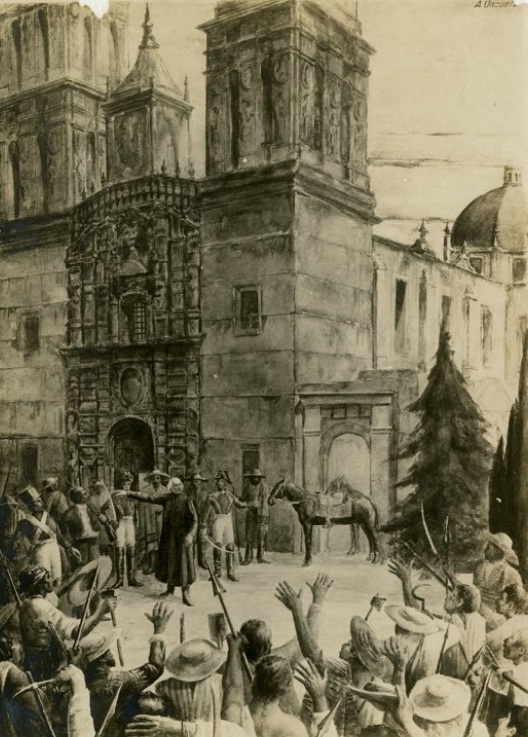
Mexico City's Zócalo: The Heart of the Celebration
If you can experience the holiday in only one place, make it Mexico City's Zócalo (Plaza de la Constitución). Every September 15 at around 11 p.m., the president steps onto the balcony of the National Palace and rings the very same bell Hidalgo rang in 1810, which was later moved to the palace. The president then recites a patriotic cry naming the heroes of independence — Hidalgo, Morelos, Josefa Ortiz de Domínguez, Allende, Aldama, and Matamoros — before ending with three shouts of “¡Viva México!” After each line, the crowd roars back.
The event draws up to half a million spectators from across Mexico and around the world. The recitation is followed by the national anthem, a fireworks display over the Zócalo, and, in recent years, projection mapping across the façades of the National Palace and the Metropolitan Cathedral. The next morning, on September 16, the national military parade marches from the Zócalo down Paseo de la Reforma, passing the Ángel de la Independencia monument. In 2025, Claudia Sheinbaum became the first woman in Mexican history to lead the Grito from the palace balcony — a reminder that even a two-century-old tradition keeps making history.
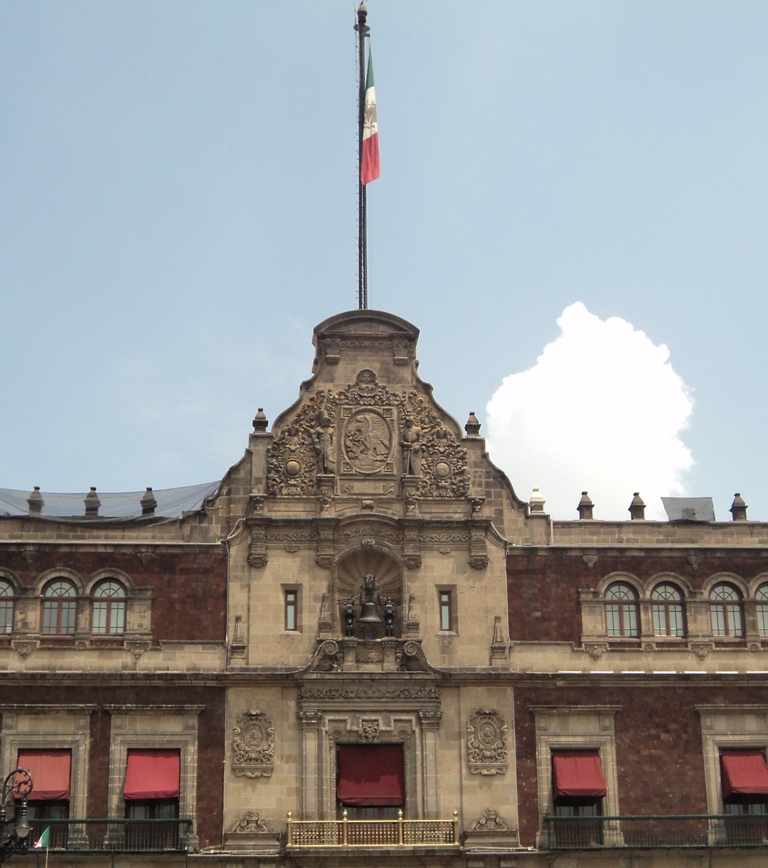
Dolores Hidalgo: Where the Revolution Was Born
For travelers who want to trace the holiday to its roots, the colonial town of Dolores Hidalgo — officially Dolores Hidalgo Cuna de la Independencia Nacional (“Birthplace of National Independence”) — is the essential pilgrimage. It was named a Pueblo Mágico (Magic Town) in 2002 and sits in the north-central part of Guanajuato state at an elevation of roughly 1,980 meters (6,500 feet).
The town's central square, set in front of Father Hidalgo's historic Nuestra Señora de los Dolores parish church, is a popular gathering spot. Beyond the history, Dolores Hidalgo is known for a ceramics industry that Hidalgo himself helped start — its inexpensive, mass-produced pottery is sold throughout Latin America and the United States. Music lovers can also visit the tomb of José Alfredo Jiménez, one of Mexico's most beloved ranchera singers and songwriters, buried in the town cemetery.

How the Whole Country Joins the Fiesta
You don't have to be in the capital to feel the energy. Similar celebrations take place in cities and towns throughout Mexico on September 15 or 16, where state governors and municipal presidents ring a bell, recite the traditional words, and finish with the threefold shout of “¡Viva México!” followed by fireworks and the national anthem. Mexican embassies and consulates around the world host their own Grito ceremonies, and the celebrations also spill over into U.S. states with large Mexican-American communities.
Planning Your Trip Around the Grito
This is one of Mexico's biggest travel weeks, so plan ahead. Flights and hotels in Mexico City fill up months before the Zócalo ceremony, which alone can draw half a million people — book early and choose accommodation within walking distance of the historic center if you can. Expect road closures around the parade route on the morning of September 16. In the Bajío region around Dolores Hidalgo and Guanajuato, September is part of the rainy season, so pack a light rain jacket and be ready for afternoon showers, with cooler evenings thanks to the high elevation. If you base yourself in Dolores Hidalgo, its location makes it easy to pair with the region's other colonial cities and pueblos mágicos.
Cinco de Mayo? That's a Different Holiday
A quick note for visitors from the U.S.: Cinco de Mayo is not Mexico's Independence Day. Cinco de Mayo commemorates the Mexican victory over French forces at the first Battle of Puebla on May 5, 1862 — decades after independence — and it is observed mainly at a local level in Puebla state. Mexican Independence Day is September 16, with the big celebration the night of September 15.
The Bottom Line: Key Points to Remember
- Mexican Independence Day is September 16; the main celebration, El Grito, happens the evening of September 15.
- The holiday marks Father Miguel Hidalgo y Costilla's 1810 call to arms in Dolores, Guanajuato.
- The biggest party is in Mexico City's Zócalo, where the president re-enacts the Grito from the National Palace balcony.
- Dolores Hidalgo, a Pueblo Mágico, is the historic birthplace of the independence movement and worth a visit.
- Book flights and lodging early, and pack for September's rainy season and cooler highland evenings.