
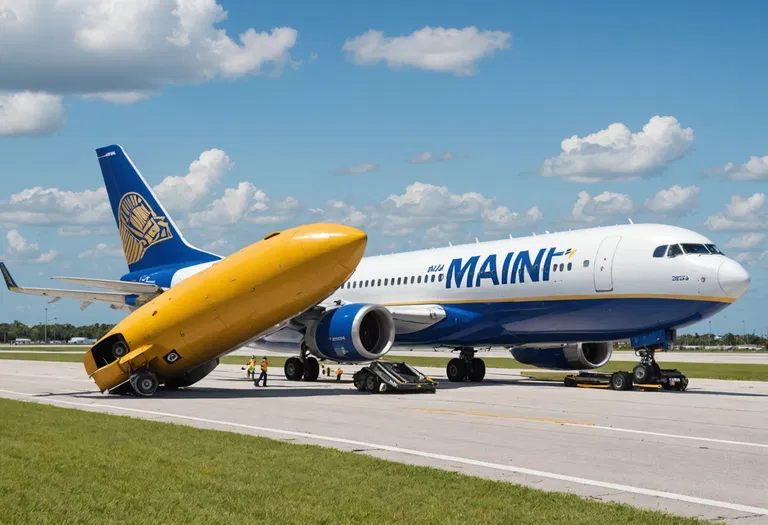
A Copa Airlines passenger jet carrying 172 people collided with a UPS cargo plane while the two aircraft were taxiing at Miami International Airport (MIA) on Saturday night, November 14, 2026, sharpening attention on safety and reliability at one of the nation's busiest travel gateways. The wingtip of the Copa Boeing 737 struck the nose of the UPS Boeing 767 at a taxiway intersection around 9:15 p.m., according to the Federal Aviation Administration, leaving two people with minor injuries and prompting a federal investigation. Unlike a runway crash, the incident was a low-speed ground collision during taxiing, which aviation experts say is far less dangerous than a runway overrun or midair collision. Even so, the mishap unfolded at the end of a turbulent week for MIA, which was still working through a nationwide FAA ground stop that had triggered hundreds of delays and cancellations across South Florida.
Two Planes, One Taxiway: Inside the Miami Airport Collision
Copa Airlines flight CM427, a Boeing 737-800, had just completed its journey from Panama City's Tocumen International Airport, touching down at MIA shortly after 9 p.m. with 166 passengers and six crew members on board. As the jet taxied toward the terminal, UPS flight 5X358 — a Boeing 767-300 freighter preparing to depart for Bogotá, Colombia — was moving through the same area of the airfield.
The FAA said air traffic controllers had instructed the UPS crew to "give way" to the Copa flight. Instead, the two jets came together where the taxiways intersect: the Copa 737's left wingtip tore into the nose of the UPS 767, punching a large hole in the cargo aircraft and severely damaging the passenger jet's wingtip. Air traffic control audio captured the moment, with a pilot heard saying, "Somebody hit us."
Two people were treated for minor injuries, airport officials said, an update from initial reports that suggested no one had been hurt. No passengers were seriously injured, and the Copa jet was able to come to a stop safely. The FAA is investigating the ground collision, and the National Transportation Safety Board (NTSB) is leading the formal inquiry into how the two aircraft ended up on a collision course.
Timeline: From a Panama Landing to a Taxiway Strike
- Saturday, Nov. 14, 6:15 p.m. ET — Copa Airlines CM427 departs Panama City bound for Miami.
- 9:01 p.m. — The Boeing 737-800 lands at MIA and begins taxiing with 172 people aboard.
- About 9:15 p.m. — The Copa jet's left wingtip strikes the nose of UPS flight 5X358 at a taxiway intersection.
- Late Saturday — Two people are treated for minor injuries; the FAA confirms the collision and says the UPS crew had been told to give way.
- Sunday — Federal investigators begin reviewing the damage, air traffic control audio and taxiway records.
Why the Miami Collision Matters for Travelers
Taxiway collisions between large commercial aircraft are rare, and this one arrives at a tense moment for aviation at Miami International Airport. Just over two months earlier, on September 6, 2026, an Amazon Prime Air cargo plane — a Boeing 767 operated by contractor 21 Air — overran the runway at MIA, killing five people and injuring five others. Investigators later attributed that crash to pilot error.
Then, on Thursday, November 12, a nationwide FAA system outage triggered a rare ground stop that halted departures across the country. Although the stop was lifted within hours, the ripple effects lingered for days. By Saturday, Miami and neighboring Fort Lauderdale-Hollywood International Airport were still absorbing hundreds of flight delays and dozens of cancellations, with MIA reporting roughly 99 canceled arrivals and 33 canceled departures on Saturday alone.
For travelers, the sequence of events is a reminder of how quickly a single disruption can cascade through the hub-and-spoke system that moves millions of passengers between North America, the Caribbean and Latin America each year. Miami is the busiest U.S. gateway to the region, and Copa Airlines is one of its biggest international carriers, making the incident especially relevant for anyone flying to or from Central and South America.
Miami Flight Status Now: Delays, Cancellations and What to Expect
Miami International Airport has largely returned to normal operations, but residual delays continue as airlines work through the backlog from the week's disruptions. Transportation Secretary Sean Duffy said the nationwide ground stop had been lifted and that carriers were "working to resume normal schedules."
If you are flying through MIA in the coming days, check your flight status directly with your airline before heading to the airport, and allow extra time for check-in and security. Travelers connecting through Miami on Copa Airlines or other Latin American carriers should confirm their onward flights, since schedule changes can ripple through tight international connections.
What Happens Next: The Investigation and Your Trip
The NTSB's investigation will focus on the taxiway instructions, ground-control procedures and the exact sequence of events that put the two jets in the same space. A central question is why the UPS crew, which the FAA says was told to give way, moved into the path of the Copa jet. Investigators will review air traffic control recordings, aircraft damage and airport surface-movement data before issuing findings.
For passengers, the practical steps are straightforward: enroll in airline text or app alerts, monitor your flight before leaving home, and build in a buffer if you are making a connection through Miami. Consider flexible booking options and travel insurance for trips with tight layovers, especially during periods of heavy disruption.
Miami Travel Takeaways: Key Points to Know
- A Copa Airlines 737 carrying 172 people and a UPS 767 cargo jet collided on a taxiway at Miami International Airport on Saturday night, November 14, 2026.
- The passenger jet's wingtip struck the cargo plane's nose; two people had minor injuries, and no passengers were seriously hurt.
- The FAA said controllers had told the UPS crew to give way; the NTSB is leading the investigation.
- The collision followed a nationwide FAA ground stop two days earlier and came about two months after a fatal Amazon cargo crash at MIA.
- Flights at MIA are running again, but check your airline's app for status and allow extra time when connecting through Miami.