
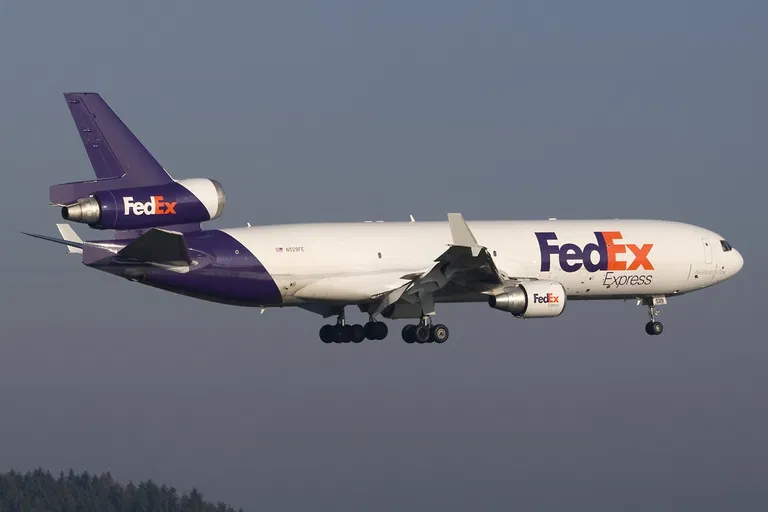
A FedEx cargo jet overran a runway at Miami International Airport on Thanksgiving Eve, triggering a ground stop that rippled through one of the heaviest travel days of the year and left thousands of holiday flyers adjusting their plans. The McDonnell Douglas MD-11 freighter — operating as FedEx Flight 910 from Memphis — veered off Runway 26R while landing amid rain and gusty wind on Wednesday, November 25, 2026, and came to rest just short of a busy road near the airport's perimeter fence. All three crew members aboard escaped without serious injury, but the incident closed all but one of MIA's runways and set off cascading delays that stretched into Thanksgiving morning.
The overrun also marked the second time in less than 12 weeks that a cargo jet has run off a runway at Miami International Airport, reviving questions about runway safety at one of the country's busiest international gateways. Here's what happened, how it affected travel, and what passengers should know before heading to MIA.
Inside the Incident: FedEx Flight 910's Runway Overrun
According to preliminary reports from the Federal Aviation Administration, FedEx Flight 910 — a McDonnell Douglas MD-11F registered N605FE — was arriving from Memphis, Tennessee, when it touched down on Runway 26R at roughly 8:25 p.m. Eastern time. The three-engine widebody freighter failed to stop on the runway and overran the far end, kicking up dirt before halting near the airport fence, just short of a nearby roadway.
Weather appears to have played a central role. Miami was experiencing rain and gusty winds Wednesday evening, conditions that aviation safety experts say can complicate landings on a wet runway. The MD-11, a long-serving tri-jet that has been a workhorse of FedEx's cargo fleet for decades, came to a stop beyond the pavement, and investigators will now work to determine exactly why.
The good news is that no one was seriously hurt. The three crew members on board escaped injury, and no one on the ground was struck. The FAA responded by issuing a ground stop, initially halting departures bound for MIA until at least 9:45 p.m. and closing all but one runway while crews assessed the disabled aircraft, according to the Associated Press and CBS News Miami.
Thanksgiving Eve Timeline: How the Disruption Unfolded
The incident could hardly have struck at a worse moment. The Wednesday before Thanksgiving is consistently one of the busiest travel days in the United States, and Miami International Airport is a major hub for flights to Latin America, the Caribbean, and dozens of domestic destinations.
Here's how the evening unfolded, based on FAA advisories and news reports:
- Around 8:25 p.m. ET — FedEx Flight 910 overruns Runway 26R while landing in rain and wind.
- Shortly after — The FAA issues a ground stop, closing all but one of MIA's runways and grounding departing flights until at least 9:45 p.m.
- Overnight — Emergency crews assess the disabled freighter, which sits just short of a busy road near the perimeter fence.
- Thanksgiving morning — Flights out of MIA remain delayed as operations recover, with ripple effects for connecting passengers across the holiday weekend.
Because the overrun involved a cargo freighter rather than a passenger jet, there were no holiday travelers on board. But the operational impact was immediate: departures were held, arrivals faced delays and potential diversions, and gate and crew schedules were thrown off at the start of the holiday rush.
Second Time in 12 Weeks: Miami's Runway Safety Wake-Up Call
The Thanksgiving Eve overrun carries an uncomfortable echo for anyone who follows aviation safety. On September 6, 2026, a Boeing 767 freighter operating as 21 Air Flight 7598 for Amazon Air overran Runway 30 at the same airport, struck multiple vehicles, and erupted in flames. Five people on the ground were killed and five others injured in one of the most serious U.S. aviation accidents of the year.
According to National Transportation Safety Board preliminary findings, that jet touched down roughly 3,750 feet down the runway and left the paved surface at about 112 knots before the fiery collision. The recurrence of a cargo overrun at MIA — this time involving a FedEx MD-11 — has renewed scrutiny of landing distances, braking conditions, and runway-end protections at the airport.
Runway 26R, the runway involved in the FedEx incident, is one of MIA's primary arrival runways. Airports commonly install engineered materials arresting systems, known as EMAS, at runway ends to safely slow an aircraft that overruns the pavement, and the incident has rekindled discussion among pilots and safety analysts about such safeguards at Miami International.
To be clear, the two incidents differ sharply in severity: the September overrun was fatal, while the FedEx event produced no injuries and no fire. But for travelers, the pattern is a reminder that runway excursions — aircraft leaving the paved surface during landing or takeoff — remain among the most common categories of serious aviation incidents, and adverse weather is frequently a contributing factor.
Where Things Stand Now: Delays, Closures and Investigations
As of Thursday morning, flights at Miami International Airport continued to recover from the overnight ground stop, with some departures still delayed into Thanksgiving Day. Officials have not released a full tally of delayed or canceled flights, but local reporting described widespread disruption at the opening of the holiday weekend.
Both the FAA and the NTSB have opened investigations into the FedEx runway excursion. Investigators will examine the aircraft's flight data and cockpit voice recorders, the weather at the time of landing, runway surface conditions, and the crew's actions. FedEx said it is cooperating with authorities and described the event as an 'issue upon landing' on the Memphis-to-Miami flight.
For now, travelers should expect lingering operational effects. Most runways had reopened by Thanksgiving morning, but the cascading impact on aircraft positioning and crew schedules can extend delays well beyond the initial closure — a reality to keep in mind if your itinerary touches Miami in the coming days.
What Miami Travelers Should Do Next
If you're flying through Miami International Airport in the coming days, a few steps can help you stay ahead of any residual disruption:
- Check your flight status before leaving home. Use your airline's app or the FAA's status page for real-time updates, and sign up for text or push alerts.
- Allow extra time. Even after runways reopen, check-in lines, security, and rebooking queues may be longer than usual as the airport works through the backlog.
- Know your rebooking options. Many airlines offer fee-free changes during significant weather or operational disruptions. Contact your carrier promptly if your plans are affected.
- Consider trip coverage during peak travel. Incidents like this are a reminder that disruptions can strike even at major hubs, and travel insurance can help offset unexpected costs.
The Bottom Line: Key Takeaways
- A FedEx MD-11 cargo freighter overran Runway 26R at Miami International Airport on Thanksgiving Eve, November 25, 2026, while landing in rain and wind.
- All three crew members were unharmed, and no one on the ground was injured; the aircraft stopped near the airport fence, just short of a busy road.
- The FAA issued a ground stop and closed all but one runway, disrupting holiday travel into Thanksgiving morning.
- It was the second cargo jet to overrun a runway at MIA in less than 12 weeks, following the fatal 21 Air Flight 7598 overrun on September 6, 2026.
- The FAA and NTSB are investigating; travelers should check flight status and allow extra time if flying through MIA.