
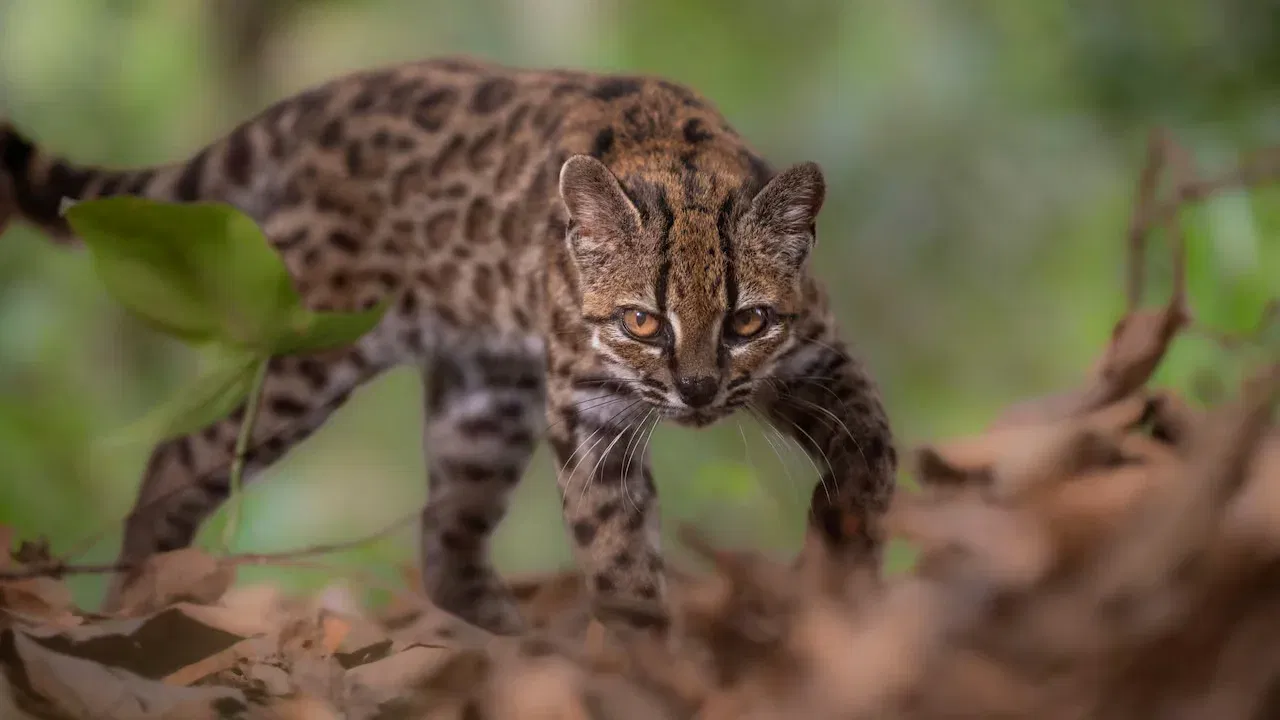
Scientists have named a brand-new cat species for the first time in more than a century — and for wildlife-loving travelers, it puts one of South America's most overlooked eco-tourism regions firmly on the map. The tilcayo tiger cat (Leopardus tilcayo), a pint-sized, spotted wildcat native to Bolivia's Yungas cloud forest, was formally described in September 2026, becoming the first new cat species identified since the Pampas cat was named in 1923.
The announcement, published in the journal Current Biology on September 17, 2026, is more than a scientific milestone. The tilcayo calls home a lush, mist-shrouded cloud forest that spills down the eastern slopes of the Andes just a few hours from La Paz — and the individual cat at the heart of the discovery can still be visited today at a Bolivian wildlife sanctuary. For travelers who plan trips around rare wildlife, there may be no more intriguing new destination right now.
A "Mini Leopard" Hiding in Plain Sight
The tilcayo is a tiger cat — one of the small, spotted felines in the genus Leopardus that roam the forests of South and Central America. It is tiny by almost any measure: roughly three pounds (about 1.5 to 2 kilograms) with a head-and-body length of around 18 inches, smaller than the average house cat. Its light-brown coat is marked with large, irregular, dark-brown to black rosettes that have drawn comparisons to a miniature leopard, along with short round ears, long whiskers, and a distinctly scrunched-up face.
Its path to scientific recognition began in 2016, when Bolivian biologist and National Geographic explorer Paola Nogales-Ascarrunz received a call from the Senda Verde wildlife sanctuary in Bolivia's Yungas region. A man in La Paz had found the animal as a kitten and raised it for about a year, believing it to be a domestic cat — reportedly feeding it "noodles, rice, and eggs" before realizing it needed the care of a sanctuary.
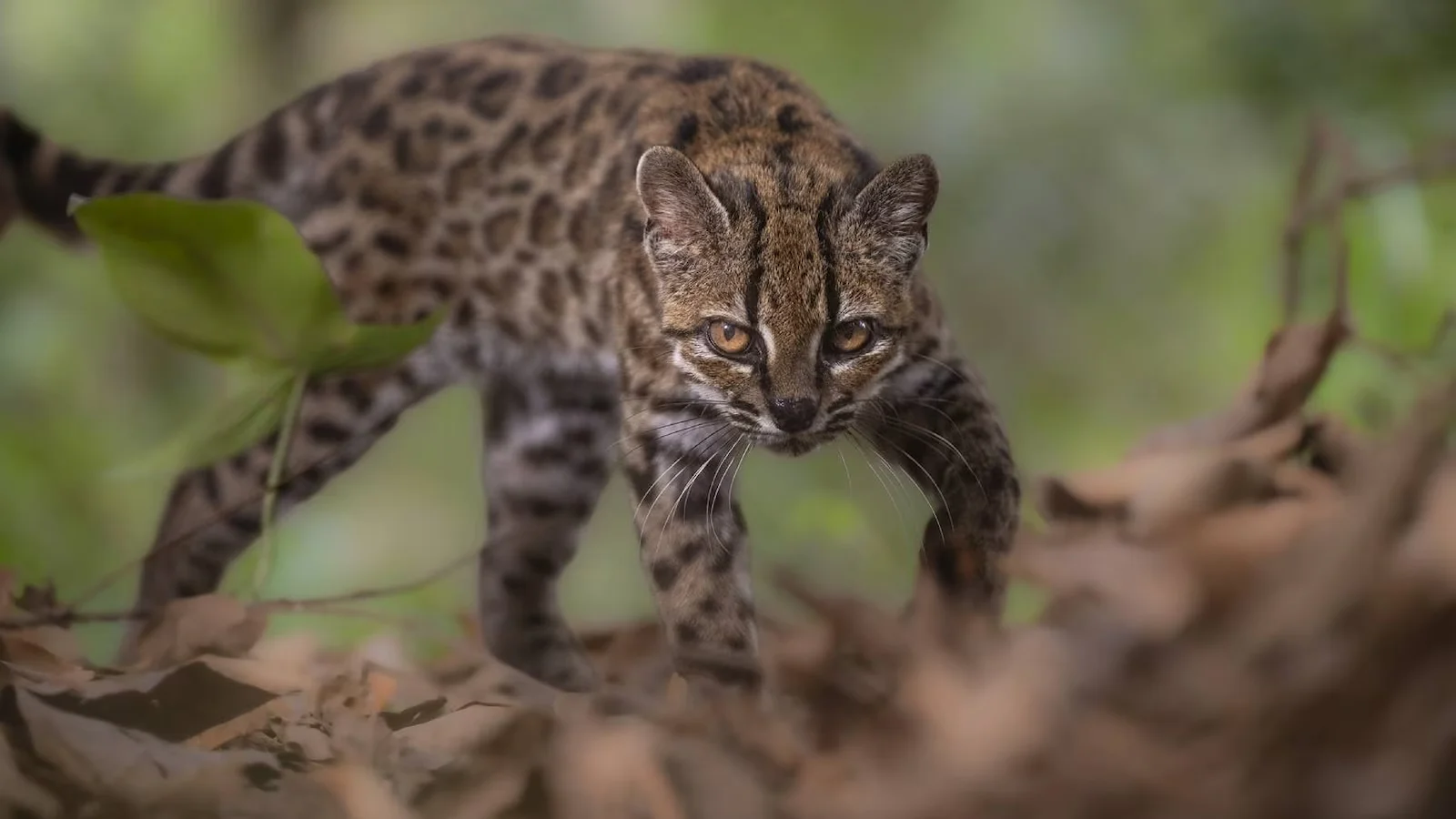
Nogales-Ascarrunz was intrigued. She photographed the cat but initially assumed it was simply an unusual-looking member of the related oncilla (Leopardus tigrinus). It wasn't until 2019, while assembling a booklet of Bolivia's cat species, that she realized the sanctuary's resident looked distinct. Genomic analysis later confirmed it: the cat was a species of its own, one of five tiger cat species revealed by a genetic study of 38 cats from across South and Central America.
From a Rescued "Kitten" to a New Species: A 10-Year Timeline
The tilcayo's journey from rescued pet to officially named species unfolded over a decade:
2016 — A La Paz man finds a spotted kitten, believes it's a domestic cat, and cares for it for about a year before handing it over to the Senda Verde sanctuary. The sanctuary contacts Nogales-Ascarrunz, who photographs the animal.
2019 — While compiling a guide to Bolivia's cats, Nogales-Ascarrunz notices the sanctuary cat looks different from the oncilla and begins to suspect it may be a new species.
September 2026 — A team led by Nogales-Ascarrunz, Enzo Aliaga-Rossel, Jonas Lescroart, and Eduardo Eizirik publishes its findings in Current Biology, formally naming Leopardus tilcayo. Genetic analysis suggests the species split from its relatives more than 1.4 million years ago.
The name itself is a nod to locals. "Tilcayo" is the word communities in the region already used for the cat, though its exact origin is a mystery. As Nogales-Ascarrunz recounted, when researchers asked locals why they called it tilcayo, they replied: "I don't know! My grandpa called it tilcayo, so I call it tilcayo."
Why Bolivia's Cloud Forest Is the Newest Wildlife Travel Destination
The tilcayo's home turf is the Bolivian Yungas, a belt of cloud forest wedged between the high Andes and the Amazon basin — a region researchers describe as among the least-studied in the Neotropics. For travelers, that is precisely the appeal: a biodiversity hotspot that has largely stayed under the tourism radar, reachable in about three hours by road from La Paz, with the town of Coroico (around 1,525 meters above sea level) serving as a natural base.
The tilcayo was recorded near the town of Arapata in Nor Yungas Province, La Paz Department, at roughly 1,570 meters above sea level. Scientists still know little about its habits: camera footage hints it is most active at night, and the remains of small rodents found in droppings suggest those make up part of its diet. Much of its life in the wild remains to be documented — which is exactly what makes the Yungas an exciting frontier for nature-focused travelers and citizen scientists.
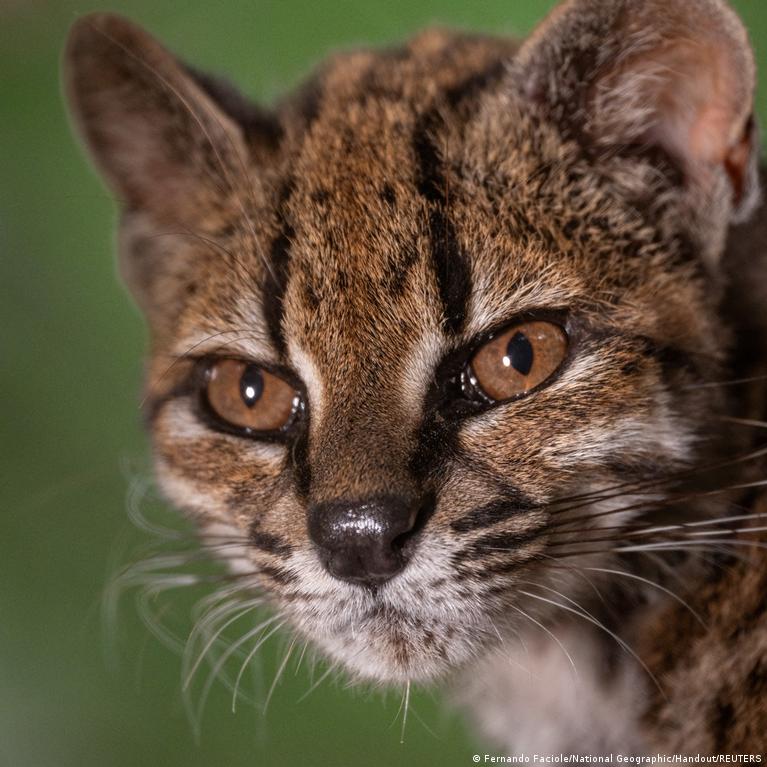
Beyond the cat itself, the Yungas reward slow travel. The region is threaded with dramatic mountain roads, centuries-old stone trails, and Afro-Bolivian communities, and it forms part of the habitat of the spectacled bear. Its warm valleys produce coffee and tropical fruit, while the surrounding forest shelters jaguars, ocelots, and pumas — many of which travelers can observe responsibly at rescue centers such as Senda Verde. For a region so close to La Paz, it delivers an outsized dose of raw, under-explored wilderness.
Part of the challenge is that tiger cats are "cryptic species" — they look so similar to one another that even experts struggle to tell them apart by sight alone. Study co-lead author Jonas Lescroart, an evolutionary ecologist at the University of Antwerp, called the research "the most complete genetic study yet" of the group, a reminder of how much remains undiscovered in these cloud forests.
Where to See the Tilcayo Today
The easiest place to encounter a tilcayo right now isn't deep in the jungle — it's at Senda Verde, the wildlife sanctuary where the species was first recognized. The original cat, nicknamed "Tigrino," is now 10 years old and continues to live under protective care at the refuge as of late 2026.
Senda Verde has operated as a rescue, rehabilitation, and conservation center since 2003 and welcomes visitors as part of its ethical eco-tourism model. A guided visit typically offers encounters with rescued Andean bears, jaguars, ocelots, pumas, monkeys, birds, reptiles, and butterflies — making the sanctuary a natural stop for travelers moving between La Paz and the Yungas, and now the home of a genuine scientific celebrity.
What's Next for the Tilcayo and Cloud Forest Conservation Travel
The tilcayo has not yet been formally assessed by the IUCN Red List, though the two tiger cat species the organization currently recognizes are both listed as vulnerable. The research team has shared its findings with the IUCN ahead of a planned reassessment of tiger cats, and conservationists hope each newly delineated species will receive its own status.
There is a note of urgency, too. Study co-author Tadeu de Oliveira, an ecologist at Brazil's State University of Maranhão, warned that the tiger cat species identified in the research inhabit habitats that are "vanishing fast." For travelers, that translates into a straightforward ethos: visit responsibly, support sanctuaries and local guides, and treat these cloud forests as the fragile, irreplaceable places they are.
The tilcayo's debut also arrives as wildlife and conservation travel keeps gaining momentum, with more travelers seeking destinations where their visit can fund protection rather than pressure it. Bolivia — long overshadowed by neighbors such as Peru and Brazil on the wildlife circuit — now has a marquee species and a compelling, story-rich reason to be on the itinerary.
The Bottom Line: Planning a Tilcayo-Inspired Trip
If the news has you considering a wildlife trip to Bolivia, here's what to keep in mind:
- The cat is real — and visitable. Leopardus tilcayo is the first new cat species described since 1923, and its namesake individual "Tigrino" lives at Senda Verde in the Yungas.
- The destination is the draw. The Bolivian Yungas cloud forest sits between the Andes and the Amazon, roughly three hours from La Paz, with Coroico as a convenient base.
- Go through ethical channels. Senda Verde has run rescue, rehabilitation, and eco-tourism programs since 2003, so your visit supports conservation rather than exploiting it.
- Expect the unexpected. Researchers consider the region among the least-studied in the Neotropics — the tilcayo may be only the first of many discoveries.