

If you are mapping out your 2026 travel calendar, circle the night of August 27-28, 2026. That is when a deep "blood moon" lunar eclipse will sweep across the Americas, bathing the Moon in a glowing copper-red light. The August 2026 lunar eclipse is technically partial, but with 93% of the Moon sliding into Earth's dark inner shadow, it will look strikingly close to totality — and it is the final act of a rare four-eclipse "tetrad" sequence that has been captivating skywatchers since 2025.
A Near-Total Blood Moon: What Makes This Eclipse Special
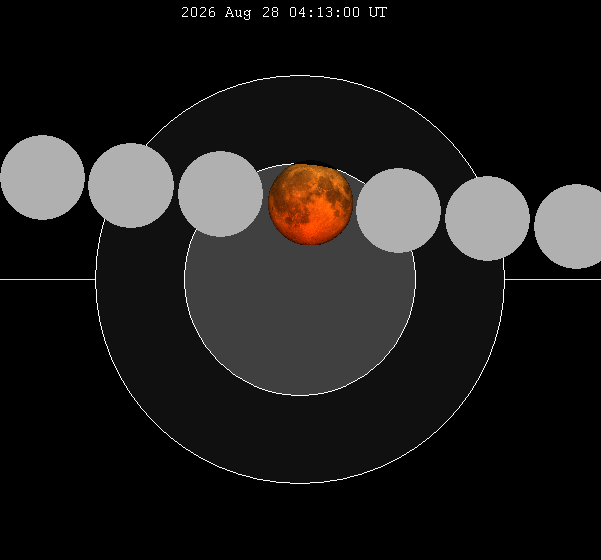
On Friday, August 28, 2026, the Moon will pass through Earth's shadow at its ascending node, producing a partial lunar eclipse with an umbral magnitude of 0.93. In plain terms, nearly 93% of the Moon's diameter will be covered by the darkest part of Earth's shadow, the umbra, at maximum eclipse.
Here is the key detail for travelers: a lunar eclipse that deep does not merely dim the Moon — it transforms it. Sunlight filtering through Earth's atmosphere refracts onto the shadowed lunar surface, scattering away the blue light and leaving only the red. The result is the famous "blood moon" effect. Even though this eclipse never quite reaches totality, the vast majority of the Moon will glow a deep reddish-copper, with only a thin sliver remaining in the lighter outer shadow.
Astronomers note this is the last eclipse of an "almost tetrad" — a remarkable run that included total lunar eclipses on March 14, 2025, September 8, 2025, and March 3, 2026. If you caught any of those blood moons, this is your encore; if you missed them, this is one of your best remaining chances for years to see a near-total eclipse so effortlessly.
When to Look Up: Your Eclipse Timeline by Time Zone
Timing is everything when planning an eclipse trip, and this one favors the Americas beautifully. The eclipse unfolds entirely during nighttime hours across the Western Hemisphere. The partial phase begins at 2:33 UTC and ends at 5:52 UTC, lasting an impressive 3 hours and 19 minutes. Greatest eclipse hits at 4:12 UTC. Translated to local time:
- Eastern Time: partial eclipse begins 10:33 p.m. Aug 27, peaks at 12:12 a.m. Aug 28
- Central Time: begins 9:33 p.m., peaks 11:12 p.m. Aug 27
- Mountain Time: begins 8:33 p.m., peaks 10:12 p.m. Aug 27
- Pacific Time: begins 7:33 p.m., peaks 9:12 p.m. Aug 27
- UK (BST): begins 3:33 a.m., peaks 5:12 a.m. Aug 28
- Central Europe (CEST): begins 4:33 a.m., peaks 6:12 a.m. Aug 28
That means most of North America gets a prime-time show with no need for a 3 a.m. alarm — a genuine rarity that makes this a wonderfully travel-friendly eclipse.
Where to Travel: The Americas Get the Best Seats
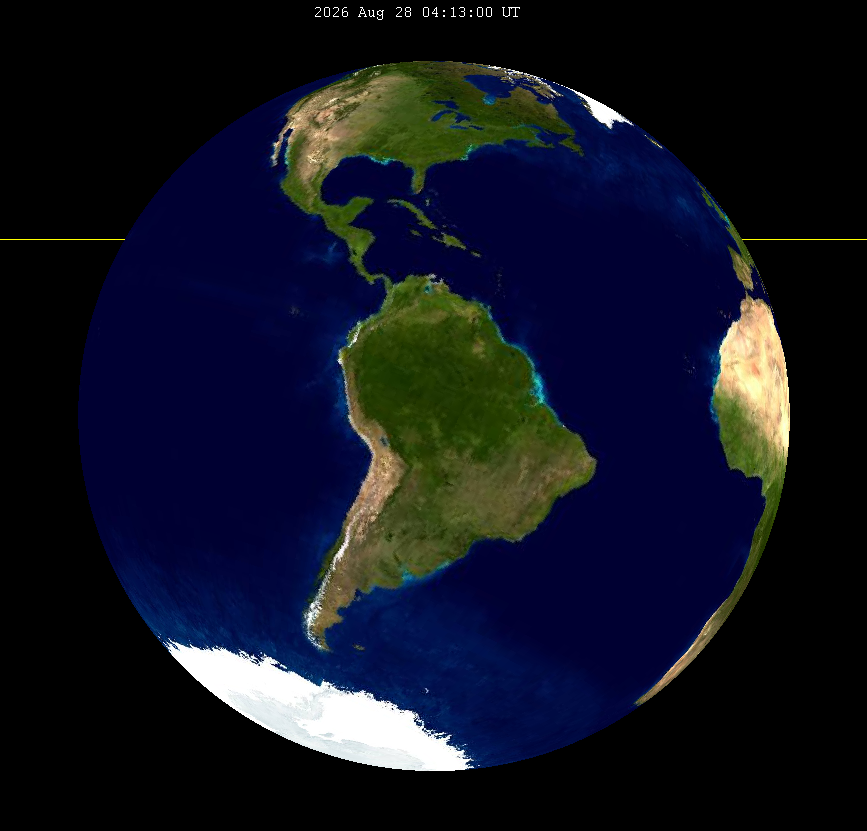
Unlike a solar eclipse, which is visible only along a narrow path, a lunar eclipse can be seen from anywhere on Earth's night side. For the August 2026 event, the entire eclipse will be visible across North and South America, while viewers in the central Pacific will see it rising and those in Africa, Europe, and the Middle East will catch it setting near dawn.
For the best experience, look south: nearly every destination in the Americas qualifies. Dark-sky regions such as the U.S. Southwest, the Atacama Desert in Chile, and Argentina's Patagonia offer some of the clearest, least light-polluted skies on the planet. Urban travelers should not despair either — a lunar eclipse is bright enough to enjoy from a city balcony, a beach, or a rooftop, so long as you have a clear view toward the south-southwest.
One quirk to plan around: the eclipse falls nearly six days after the Moon reaches apogee (its farthest point from Earth, on August 22, 2026). The Moon will appear slightly smaller than average, which produces a longer, more leisurely eclipse — but it also makes a decent pair of binoculars a nice-to-have for catching the red glow up close.
Plan Ahead: Pair It With the August 2026 Total Solar Eclipse
Here is the insider tip for serious eclipse chasers: just 16 days before this blood moon, a total solar eclipse on August 12, 2026, will carve a path across Greenland, Iceland, and Spain. That creates a once-in-a-generation opportunity to build a two-eclipse travel itinerary within a single month.
Fly to Iceland or northern Spain for the total solar eclipse in mid-August, then cross the Atlantic for the lunar eclipse over the Americas at the end of the month. It is the kind of bucket-list trip that eclipse enthusiasts plan years in advance — and with the 2026 solar eclipse already drawing significant travel demand, locking in accommodations early is essential.
How to Watch (and Photograph) the Blood Moon
The beauty of a lunar eclipse is that it requires zero special equipment and is completely safe to view with the naked eye — no eclipse glasses needed, unlike a solar eclipse. To make the most of it:
- Find an open view toward the south-southwest and get away from bright city lights if you can.
- Arrive 30-45 minutes before the partial phase begins so your eyes can adapt to the dark.
- For photos, use a tripod and a camera or smartphone with manual exposure to capture the deep red tones; the Moon gets surprisingly dim at mid-eclipse.
- Dress for a late night — even in August, temperatures drop after dark in mountain and desert destinations.
The Bottom Line: Key Points for Travelers
- The August 28, 2026 lunar eclipse is a deep partial eclipse (93% coverage) that will turn the Moon a reddish "blood moon."
- It is completely visible across North and South America, with prime evening viewing on August 27-28.
- Greatest eclipse occurs at 4:12 UTC — about midnight Eastern and 9:12 p.m. Pacific.
- The partial phase lasts more than three hours, and no special equipment is required to enjoy it.
- It caps a rare "almost tetrad" of eclipses and pairs with a total solar eclipse just 16 days earlier over Europe.