
Planning an international trip in 2025 or 2026? Your passport should be at the top of your packing checklist — and with good reason. After the massive passport processing backlog of 2023 left millions of travelers scrambling, the U.S. State Department has made significant strides in reducing wait times. Routine passport processing now takes just 4 to 6 weeks, down sharply from the 10.5-week peak, while expedited service runs 2 to 3 weeks. But with new entry requirements rolling out for Europe, the REAL ID deadline now in effect, and the ever-important six-month validity rule to navigate, staying on top of your passport status has never been more critical for smooth travel.
How the State Department Slashed Passport Processing Times
The story of the 2023 passport backlog is one for the books. As COVID-era travel restrictions lifted, international travel boomed and the State Department was hit with nearly 2 million more passport applications than expected — on top of over a million already pending. From May through July 2023, routine applications averaged a staggering 10.5 weeks, while even expedited service took 6.1 weeks. Travelers resorted to extreme measures, with some flying from as far as Maine to the Honolulu passport agency just to secure an in-person appointment.
To resolve the crisis, the State Department required passport staff to work up to 24 hours of overtime per month — over 250,000 hours in total during fiscal year 2023. By December 2023, wait times returned to pre-pandemic levels of 6 to 8 weeks, and they've continued to drop. Today, routine processing stands at just 4 to 6 weeks, with expedited processing available in 2 to 3 weeks for an additional fee.
Timeline: From Backlog to Recovery and Beyond
2017-2018: Hiring freeze leads to staffing shortages at passport agencies, forcing specialists to work extensive overtime just to maintain processing times.
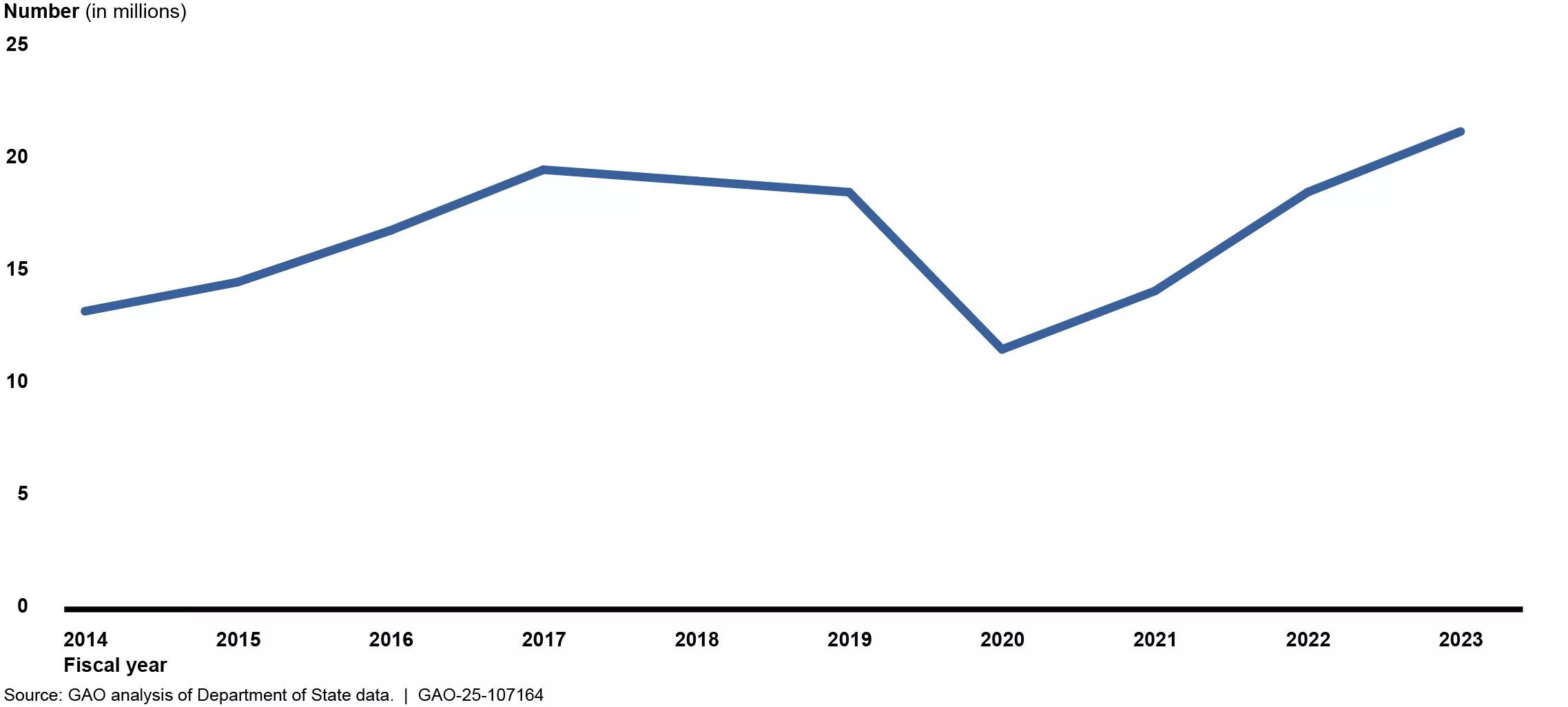
2020: Pandemic brings international travel to a halt. Passport applications plummet sharply from fiscal year 2019 levels.
2021-2022: Travel restrictions lift and demand surges. The State Department starts the year with over 1 million pending applications, then receives nearly 2 million more than anticipated.
May-July 2023: The backlog peaks. Routine processing averages 10.5 weeks; expedited takes 6.1 weeks. Travelers cancel or postpone trips, and some fly across the country for in-person appointments.
December 2023: State Department reports wait times back to pre-pandemic levels of 6-8 weeks.
2024-2025: Wait times continue to drop. Routine processing falls to 4-6 weeks, expedited to 2-3 weeks. Six new passport offices are announced.
May 7, 2025: REAL ID enforcement begins for domestic air travel within the U.S.
August 2025: Federal News Network reports passport demand is "magnitudes" higher than before the pandemic, but the State Department is managing without new backlogs, thanks to modernization efforts.
Q4 2026: ETIAS (European Travel Information and Authorisation System) is expected to launch for travel to 30 European countries.
Why Passport Readiness Matters More Than Ever in 2025
With passport demand at historic highs, experts recommend applying or renewing well ahead of any planned travel. The State Department advises submitting applications at least 6 to 8 weeks before your departure date, even with the improved processing times. For those traveling in less than 3 weeks, an in-person appointment at a passport agency is required.
One of the most overlooked trip-ruiners is the six-month passport validity rule. Many countries — including popular destinations like India, Ghana, and much of Southeast Asia — require your passport to be valid for at least six months beyond your date of entry. Some nations, including most EU countries, require three months beyond your departure from the Schengen Area. Canada and Mexico are more lenient, typically only requiring validity for the duration of your stay.
To avoid being denied boarding at the airport, check the specific entry requirements of your destination on the State Department's website at least three months before your trip. If your passport is expiring within a year, renewing early is the safest bet. The good news: a U.S. passport is valid for 10 years for adults (5 years for children under 16), so a renewal now sets you up for a decade of travel.
New Requirements: REAL ID and ETIAS on the Horizon
Two major changes in travel documentation are already affecting — or will soon affect — American travelers.
REAL ID: As of May 7, 2025, U.S. travelers must present a REAL ID-compliant driver's license or another acceptable form of identification (such as a U.S. passport book or passport card) to board domestic flights. Your U.S. passport is already REAL ID compliant, so if you don't have a REAL ID license yet, you can simply use your passport for domestic air travel. However, a passport is still required for all international air travel.
ETIAS for Europe: Starting in the last quarter of 2026, Americans and other visa-exempt travelers will need to obtain an ETIAS (European Travel Information and Authorisation System) authorization before visiting any of 30 European countries in the Schengen Area. The online application is expected to be quick and affordable, but it's a new requirement to plan for. Your passport must also be valid for at least 3 months beyond your intended departure from the Schengen Area.
Where Things Stand Now: A New Era for Passport Services
The State Department isn't resting on its improved numbers. According to a GAO report published in March 2025, the agency is pursuing long-term modernization to prevent future backlogs. Key initiatives include opening six new passport agencies in Charlotte, Cincinnati, Kansas City, Orlando, Salt Lake City, and San Antonio; developing a live web chat for customer service; creating a system for submitting application documentation via mobile devices; and exploring a "digital passport" that could serve as a companion to physical passport books.
Online passport renewal has also been expanded. Eligible travelers who meet specific criteria — including being 25 or older, not traveling for at least 6 weeks, and having a passport issued between 2010 and 2020 — can now renew entirely online. This digital option is expected to ease pressure on the system and speed up processing for millions of applicants.
What Happens Next: Planning Ahead for Stress-Free Travel
With demand showing no signs of slowing, the best strategy for travelers is simple: plan ahead. Check your passport's expiration date immediately if you're considering international travel in the next year. Remember the six-month validity rule for your destination. Factor in the new ETIAS requirement if you're planning a European trip in late 2026 or beyond. And if you're flying domestically, make sure you have a REAL ID or bring your passport as a backup.
The good news is that the State Department has turned the corner on the backlog crisis, and the future of passport processing looks brighter. With modernized systems, new offices, and the convenience of online renewal, getting or renewing a passport is easier than it has been in years — as long as you don't wait until the last minute.
Key Takeaways for Travelers
- Renew early: Apply at least 6-8 weeks before travel; routine processing takes 4-6 weeks, expedited 2-3 weeks
- Check the six-month rule: Many countries require 6 months of passport validity beyond your entry date — verify requirements for your destination
- REAL ID is now in effect: Use your passport for domestic flights if you don't have a REAL ID-compliant license
- Prepare for ETIAS in 2026: Europe will require pre-travel authorization for U.S. citizens starting Q4 2026
- Use online renewal if eligible: Skip the mail and renew digitally through the State Department's online portal
- Passport cards work for land/sea: A passport card is sufficient for travel to Canada, Mexico, and the Caribbean by land or sea