
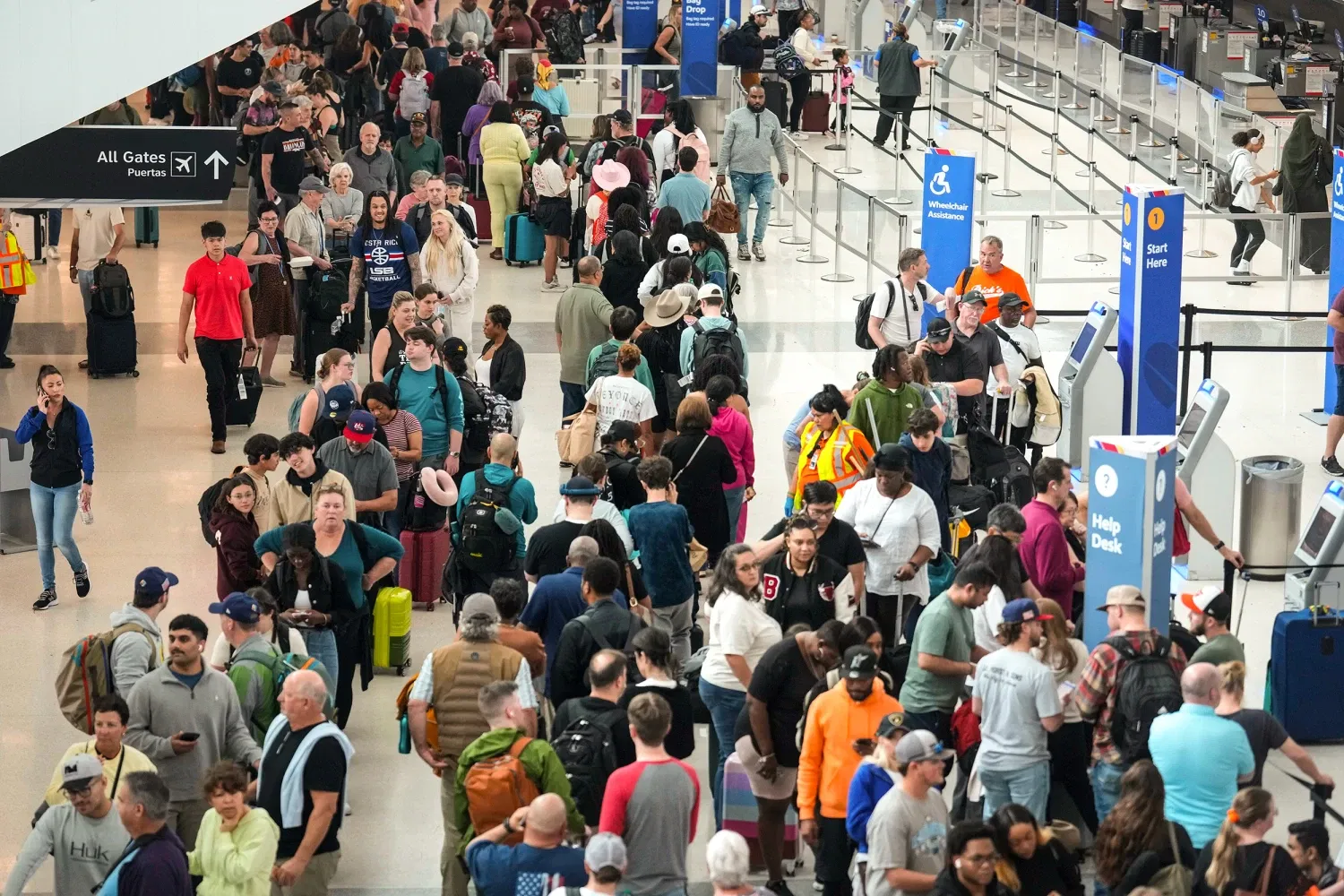
Spring break travel has turned into a nightmare for thousands of Americans as TSA wait times at major airports soar to unprecedented levels, with some security lines stretching to 3.5 hours amid a partial government shutdown that has crippled staffing at security checkpoints nationwide. The Department of Homeland Security funding lapse that began in mid-February has forced Transportation Security Administration officers to work without pay, leading to massive absenteeism, employee departures, and what airports are calling "crippling" staffing shortages during one of the busiest travel periods of the year.
How the Shutdown Created Airport Security Chaos
The current crisis traces back to February 13 when funding for the Department of Homeland Security expired, triggering a partial shutdown that specifically affects TSA, FEMA, and the Coast Guard. While TSA officers are considered essential employees required to work without pay during funding lapses, the financial strain has proven too much for many frontline workers. According to internal TSA statistics obtained by CBS News, unscheduled absences among airport security officers have more than doubled nationwide since the shutdown began, with the callout rate rising from about 2% before the funding lapse to an average of 6% during the shutdown.

"These political stunts force patriotic TSA officers, who protect our skies from serious threats, to work without pay," Department of Homeland Security spokeswoman Lauren Bis said in a statement obtained by NBC News. "These frontline heroes received only partial paychecks earlier this month and now face their first full missed paycheck, leading to financial hardship, absences, and crippling staffing shortages."
The situation reached critical levels during the first weekend of March, coinciding with the start of spring break travel. At Houston's William P. Hobby Airport, wait times stretched to 2 hours and 45 minutes just before noon on Sunday, March 8, with the airport warning on social media that TSA wait times might exceed three hours. "Due to the federal government shutdown, passengers should arrive 4-5 hours before their flight to allow extra time for TSA screening," the airport advised travelers.
Timeline: How the Airport Crisis Unfolded
The current travel disruption follows a predictable but devastating pattern that begins with funding gaps and ends with travel chaos. Here's how events unfolded:
- February 13, 2026: DHS funding expires, triggering partial government shutdown affecting TSA
- February 17: TSA website and app pause operations, leaving travelers without official wait time information
- February 23: Nationwide TSA officer absence rate peaks at 9% during a major blizzard that affected Northeast airports
- March 6-7: Absence rates hit 8% nationally as financial strain on officers intensifies
- March 8-9: Worst weekend for travel delays with Houston Hobby Airport experiencing 53% officer callouts on March 8 and 47% on March 9
- March 10: Multiple airports issue advisories telling travelers to arrive 4-5 hours before flights
"We are in spring break travel season and expecting record numbers of people to take to the skies," said Airlines for America president and CEO Chris Sununu in a statement. "Airlines have done their part to prepare; now Congress and the administration must act with urgency to reach a deal that reopens DHS and ends this shutdown."
The Data Behind the Staffing Crisis
The numbers reveal a system under extraordinary strain. According to CBS News' exclusive data, the shutdown has accelerated departures from the TSA workforce, with 305 employee separations recorded between February 14 and March 9. At individual airports, the absence rates tell an even more dramatic story:
- John F. Kennedy International Airport: 21% average absence rate during shutdown
- Hartsfield-Jackson Atlanta International Airport: 19% average absence rate
- William P. Hobby Airport (Houston): 18% average absence rate
- Louis Armstrong New Orleans International Airport: 14% average absence rate
- Pittsburgh International Airport: 13% average absence rate
Former TSA Administrator John Pistole told CBS News that the situation represents "a huge morale hit for TSA" and expressed concern that adversaries could try to exploit "a perceived vulnerability because there's not as many people at TSA showing up for work." Pistole noted that after the 2025 shutdown, TSA "lost nearly 1,100 security officers who resigned because they had to have income and they weren't being paid."
The staffing crisis has created what TSA internally calls "hotspots"—incidents where staffing shortages threaten to slow checkpoint operations. Houston airports alone recorded 44 such incidents during the shutdown period, with other major hubs reporting similar challenges.
Where Things Stand Now: Airport Advisories and Traveler Frustration
As of March 10, the situation remains critical at airports across the country. The Louis Armstrong New Orleans International Airport (MSY) has warned travelers that a shortage of TSA workers at security checkpoints is causing "longer-than-average lines" and asked passengers to arrive at least three hours before departure. However, some airports are recommending even earlier arrivals—up to 4-5 hours before flight time.
Compounding the problem, the TSA website and app that normally provide real-time wait time information have been offline since February 17 due to furloughed staff. A TSA spokesperson told Fox News Digital that "some individual airports track [security line] wait times, [so] we would point them [in] that direction" for information.
Travelers have taken to social media to share images of packed security lines spilling into airport parking lots and concourses. One Southwest Airlines passenger at Houston Hobby Airport reported being in an hour-and-a-half line just to check baggage, with her flight due to leave in 2.5 hours. "TSA isn't working so security is basically shut down!! They say the security line is at least four hours long right now," she wrote.
What Happens Next: The Road Ahead for Travel Security
The immediate future looks challenging for spring break travelers. With Congress deadlocked over DHS funding and no clear resolution in sight, aviation experts warn that the staffing crisis could worsen before it improves. Each day the shutdown continues increases the likelihood that more TSA officers will leave for other employment, creating a staffing hole that could take months to fill due to the 4-6 months of training required for new officers.
Some policy experts see potential long-term solutions in restructuring how airport security is funded and staffed during government shutdowns. "Some aviation experts see the TSA screening program as a potential model for keeping security lines moving with fewer disruptions during funding lapses," reported the Economic Times, suggesting that alternative funding mechanisms or advance appropriations could prevent future crises.
For now, the travel industry is united in calling for immediate congressional action. Airlines for America has decried what it characterized as the use of transportation security workers for "political leverage" and the subsequent delays and strain on the aviation system. The union representing TSA employees has expressed pessimism about a quick resolution, noting that Congress would need to reach a funding agreement that has thus far proven elusive.
The Bottom Line: Key Points for Travelers
If you're traveling during the government shutdown, here's what you need to know:
- Arrive extremely early: Plan to arrive at the airport 4-5 hours before your flight, even for domestic travel
- Check airport-specific resources: Since the TSA app and website are offline, check your airport's website or social media for wait time updates
- Prepare for variability: Wait times can change rapidly depending on staffing levels—what was a 2-hour wait one day could be 4 hours the next
- Consider alternative airports: If possible, look at nearby airports that might have shorter wait times
- Pack patience: TSA officers are working under extraordinary pressure without pay—courtesy and understanding can go a long way
The current crisis underscores how government funding disputes can have immediate and severe consequences for everyday Americans. As travel industry representatives have noted, the aviation system depends on reliable funding and staffing, and when political impasses disrupt that stability, it's travelers who pay the price—in this case, with hours of waiting and missed flights during what should be a joyful spring break season.