
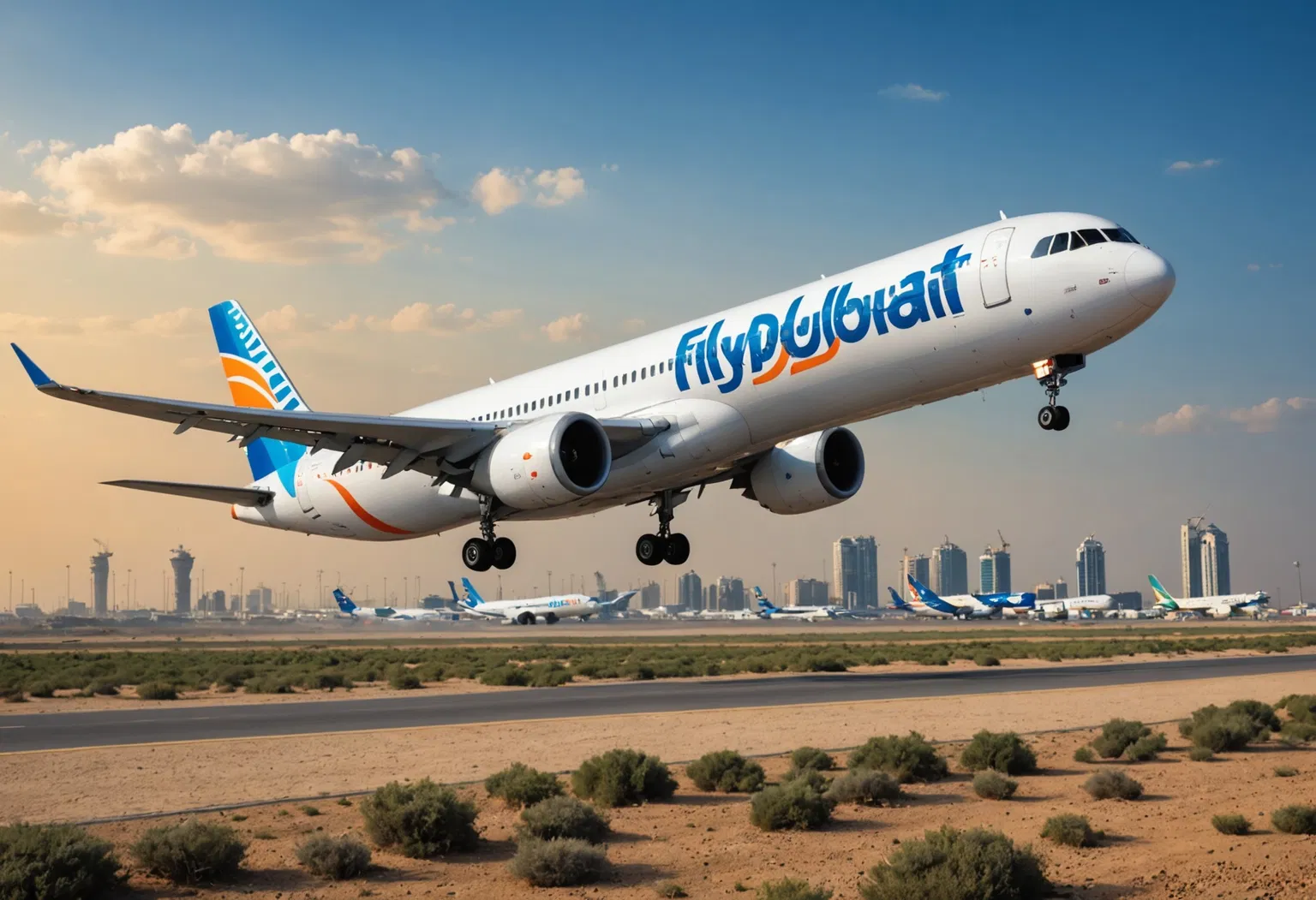
A flydubai flight from Dubai to Tel Aviv was forced into an emergency landing in Saudi Arabia on Wednesday, September 30, 2026, after what officials described as a violent attack in the cockpit in which the co-pilot is believed to have stabbed the captain. Flydubai Flight FZ1073, carrying roughly 174 passengers and crew, broadcast emergency and hijack alerts mid-air before touching down safely at Tabuk airport, where crew members and passengers helped subdue the attacker. Israeli authorities are investigating the episode as a possible attempted terror attack, putting renewed attention on one of the busiest air corridors between the Gulf and Israel.
Flydubai confirmed the aircraft "experienced an incident" en route to Tel Aviv and diverted to Tabuk, where it landed safely, adding that all passengers and crew were "safe and accounted for." No traveler injuries were reported, though both pilots were taken to a hospital for treatment.
What happened on Flydubai Flight FZ1073
The narrow-body Boeing 737 was en route from Dubai International Airport to Ben Gurion Airport near Tel Aviv when the situation escalated. Citing Israeli officials, Reuters reported that the co-pilot — identified in Israeli media as an Omani national — is "believed to have stabbed the captain" with a knife before cabin crew entered the cockpit and took control of the aircraft. The captain, reported to be an Indian national, was wounded in the attack. The plane then changed course and began a rapid descent toward Tabuk, a city in northwestern Saudi Arabia.
Flight-tracking data captured the severity of the emergency. According to FlightRadar24, the aircraft first squawked code 7700, the international signal for a general emergency, and later code 7500, which indicates unlawful interference or hijacking. CNN reported the plane dropped roughly 17,000 feet in a matter of minutes, while NBC News cited tracking data showing a descent of more than 14,000 feet in under 30 seconds. Passenger videos shared with Israeli media captured the panic inside the cabin during the plunge.
Once the aircraft was on the ground in Tabuk, passengers and crew intervened. Several travelers told Israeli media that the attacker was subdued after the stabbing, and Israeli outlets praised the "heroism" of those who stepped in. Among them was Tzvika Manes, a senior Israeli banking executive, who was reported to be among the passengers who helped restrain the co-pilot, along with off-duty pilots traveling on the flight. Israeli officials said a "major disaster" was avoided.
Timeline: How the emergency unfolded
The incident developed quickly on the morning of September 30, 2026:
- Departure: Flight FZ1073 leaves Dubai bound for Tel Aviv with around 174 passengers and crew on board.
- Mid-flight: The co-pilot is believed to attack the captain in the cockpit. The aircraft transmits emergency code 7700, followed by 7500.
- Rapid descent: The jet drops roughly 17,000 feet as the crew regains control and diverts toward Saudi Arabia.
- 9:45 a.m. local time: The aircraft lands safely at Tabuk airport, according to Saudi authorities cited by The New York Times.
- After landing: Passengers and crew subdue the suspect, and both pilots are taken to a hospital.
Some early reports initially reversed the roles of the two pilots, but the account cited by Reuters and multiple Israeli officials has remained consistent: the Omani co-pilot is suspected of attacking the captain and then attempting to take control of the aircraft.
Why the Dubai–Tel Aviv route matters to travelers
Flydubai is not just any carrier on this route — it is one of the most important links between the Gulf and Israel. Since the United Arab Emirates and Israel normalized relations under the 2020 Abraham Accords, direct flights between Dubai and Tel Aviv have become a cornerstone of travel between the two countries. Flydubai launched the route with a double-daily service of 14 flights a week and has since expanded to as many as ten daily rotations at peak times, making it the highest-frequency connection of its kind.
The airline has also built a reputation for continuity on the corridor. As one Israeli business figure put it after the incident, "Flydubai and Etihad are the only two airlines in the world that continued flying to Israel during the most difficult times." Emirates, the region's flagship carrier, had paused its Dubai–Tel Aviv service, leaving flydubai as the primary connection between the two cities for many travelers.
For passengers, that means a flight to Tel Aviv often involves a connection through Dubai's Terminal 3, which has additional security screening for Israel-bound travelers. The New York Times has reported that this added layer of security can add roughly an hour to the check-in process. The route's resilience — and its sheer volume — is part of why a security scare on a single flight carries such weight for travelers in the region.
Where things stand now
As of the latest updates, the diverted aircraft and its passengers were safe on the ground in Tabuk, and flydubai said all passengers were accounted for. Israeli officials told Reuters the incident is being examined as a possible attempted "terror attack," while Saudi and Emirati authorities continue their own inquiries. The precise motive remains unclear, and investigators have not publicly confirmed details about the co-pilot's background beyond early reporting identifying him as an Omani national.
Meanwhile, the broader route has continued operating. A second flydubai flight from Dubai to Tel Aviv proceeded on its normal course, according to The Times of Israel, which reported that earlier suggestions it had changed route were erroneous. Both pilots were reported to be receiving hospital treatment.
What travelers should expect next
For now, flydubai has not announced a suspension of its Dubai–Tel Aviv service, and flights have continued. Travelers booked on the route can expect heightened security and additional screening, both at Dubai's Terminal 3 and upon arrival in Israel. It is worth allowing extra time at the airport and monitoring flydubai's operational updates page, which the airline uses to publish service changes.
Aviation and security analysts will be watching closely for any findings from the investigation, which could shape cockpit security and crew protocols on carriers operating in the region. For the traveling public, the episode is a reminder that even routine routes can face sudden disruptions — and that crew members and passengers themselves often become the first line of defense.
Key takeaways for travelers
- Flydubai Flight FZ1073 from Dubai to Tel Aviv diverted to Tabuk, Saudi Arabia, on September 30, 2026, after a cockpit incident in which the co-pilot is believed to have stabbed the captain.
- The aircraft transmitted emergency codes 7700 and 7500 before landing safely at 9:45 a.m. local time; all passengers and crew were accounted for.
- Passengers and crew helped subdue the attacker, and both pilots were taken to a hospital.
- Israeli officials are investigating the incident as a possible attempted terror attack, though no motive has been confirmed.
- Flydubai's Dubai–Tel Aviv service has continued, but travelers should expect heightened security and allow extra time at the airport.