
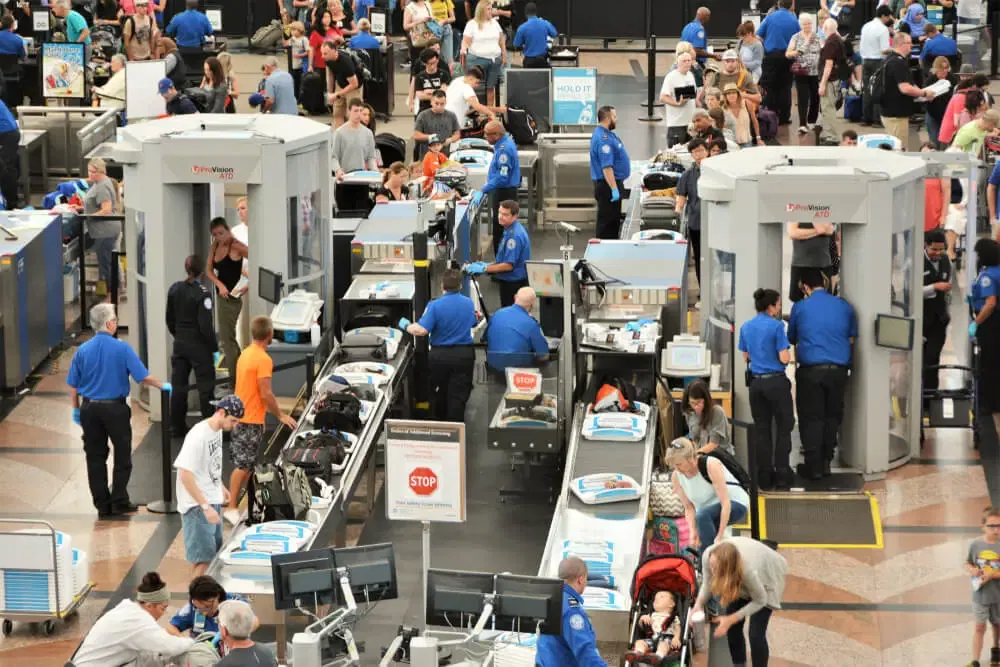
The Transportation Security Administration (TSA) has quietly unveiled one of the most significant shifts in American airport security since the agency was founded in the wake of 9/11. Dubbed TSA Gold+, the new public-private partnership program could fundamentally reshape how airport screening operates across the United States — and it's already generating intense debate among travelers, labor unions, and industry experts.
Announced via internal memo to TSA employees on May 14, 2026, and first reported by the Substack newsletter Gate Access, TSA Gold+ expands the agency's existing Screening Partnership Program (SPP) in a major way. While the name might sound like a premium fast-track service similar to PreCheck or CLEAR, it's actually something entirely different: a full-scale privatization model for airport security checkpoints.
How TSA Gold+ Works: A New Model for Airport Security
Under the current Screening Partnership Program, roughly 20 U.S. airports — including San Francisco International (SFO) and Kansas City International (MCI) — already contract with private security firms to staff their checkpoints. However, the federal government still owns and manages the screening equipment, including X-ray scanners, metal detectors, and body scanners.
TSA Gold+ takes this a significant step further. Under the new program, participating airports would allow private contractors to manage both the workforce and the screening technology — including procurement, deployment, lifecycle refreshes, and maintenance. The TSA would transition to a purely regulatory role, setting security standards and ensuring compliance while private operators handle day-to-day operations.
According to the official TSA Gold+ website, the program will "pair the Screening Partnership Program with TSA's innovation authorities to enable cutting-edge aviation security solutions." The agency says it will continue to set standards using "outcome-based measures that drive performance and security."
Participation remains completely voluntary for commercial airports, and TSA is scheduled to host an Industry Day on May 21, 2026, at its headquarters in Springfield, Virginia, to brief private vendors on the program details.
Timeline: How TSA Gold+ Developed
The push toward privatized airport screening has been building for months. Here's how the story has unfolded:
- February 2026 — A TSA-branded briefing flier is found at Orlando International Airport and shared with Federal News Network, describing an early concept of what would become Gold+.
- Early 2026 — A partial federal government shutdown forces 61,000 TSA employees to work without pay, leading to widespread staffing shortages and hours-long wait times at checkpoints nationwide.
- April 20, 2026 — Federal News Network reports that TSA is advancing a "GoldPlus" privatization plan as part of the Fiscal Year 2027 budget proposal, reallocating approximately $477 million in the process.
- April 29, 2026 — CapstoneDC publishes analysis suggesting full privatization could transform TSA into a "regulator that sets standards" rather than a direct operator.
- May 14, 2026 — TSA sends an internal memo to employees officially announcing the launch of TSA Gold+.
- May 15-17, 2026 — TSA publishes a pre-solicitation notice on SAM.gov and HigherGov, and HSToday reports that the agency is moving to formalize the program.
- May 18-19, 2026 — Major outlets including USA Today, TravelPirates, Yahoo News, and Travel Market Report cover the announcement as major breaking travel news.
- May 21, 2026 — TSA is scheduled to host Industry Day in Springfield, VA (hybrid format with virtual participation available).
The Bigger Picture: Why TSA Gold+ Matters for Travelers
The TSA screened more than 900 million passengers in 2025 — a roughly 30% increase from just a few years prior — and that number continues to climb. The agency's 25-year history has been marked by both security successes and persistent complaints about inconsistent screening experiences, long wait times, and outdated technology.
Proponents of TSA Gold+ argue that moving security to the private sector offers two key advantages. First, it would insulate airport screening from future government funding lapses — private contractors remain funded and operational during shutdowns. Second, bypassing the federal procurement process could accelerate technology upgrades, allowing private operators to deploy cutting-edge scanners without navigating years of bureaucratic delays.
"A public-private partnership structure shields airport operations from future federal funding lapses," reported Travel Market Report, noting that the recent shutdown created "hours-long wait times at checkpoints across the U.S."
However, critics warn that the program shifts critical national security responsibilities away from a government agency and into the hands of corporations motivated by profit. The American Federation of Government Employees (AFGE), the labor union representing federal TSA officers, has already come out against the proposal.
On social media, reactions have been sharp. One Reddit user on the r/fednews forum called it "the latest in the Administration's assaults on federal employees," while a poster on r/tsa described the concept of a "bespoke" airport security experience as something that "should terrify people" due to the potential for different standards based on economic levels.
Where Things Stand Now
As of mid-May 2026, TSA Gold+ remains in its early stages. The Industry Day scheduled for May 21 will be a critical milestone, where the agency briefs potential vendors — companies like Covenant Aviation Security (which already operates at SFO under SPP) and other private security firms — on the program's draft performance work statement and evaluation factors.
No airports have yet announced plans to opt in, and the TSA has emphasized that participation is entirely voluntary. The program is currently designed as a "tailored security screening service unique to each airport's needs and space configuration," according to the official TSA Gold+ landing page.
Importantly, TSA Gold+ does not replace TSA PreCheck, Global Entry, or CLEAR. Those programs remain unchanged and continue to operate as separate expedited screening options for travelers. Gold+ affects how screening is performed at the checkpoint level — not the existing trusted traveler infrastructure.
What Happens Next: The Road Ahead for TSA Gold+
Industry observers expect a gradual rollout, with larger hub airports — particularly those already frustrated by federal procurement delays and shutdown disruptions — likely among the first to explore opting in. The program dovetails with broader privatization efforts outlined in Project 2025, which proposed restructuring TSA through expanded private-sector involvement in airport screening.
For travelers, the near-term impact is likely to be minimal. Gold+ won't change how passengers prepare for security — the 3-1-1 liquids rule, shoe removal policies, and ID requirements remain in place. But over the next several years, if major airports opt in, travelers could see differences in checkpoint technology, staffing levels, and potentially the overall screening experience.
Key questions remain unanswered: Will private contractors offer better or worse pay and conditions for screening officers? Will security standards remain consistent across airports? And perhaps most importantly for travelers — will this actually make the process faster and smoother?
The Bottom Line: Key Points to Remember
- TSA Gold+ is not a new PreCheck or CLEAR program — it's a privatization model for how screening checkpoints are operated and equipped.
- Participation is voluntary — airports can choose to opt in; none have announced plans yet.
- Private contractors would manage both staff and technology under the new model, with TSA shifting to a regulatory role.
- Proponents say it protects against shutdown disruptions and enables faster technology upgrades.
- Critics, including the AFGE union, warn about profit-driven security and potential equity concerns.
- TSA's Industry Day is May 21, 2026 — a key milestone for determining how quickly the program moves forward.